Key Takeaways
- Roofing crews need convenient ground-level access—climbing down from roofs for bathroom breaks kills productivity
- Residential renovation projects face unique space constraints and homeowner concerns
- OSHA requires the same sanitation standards for residential roofing as commercial construction
- Phoenix's extreme heat makes proper placement and ventilation critical for roofing crews
- Strategic scheduling around weather patterns protects both workers and equipment
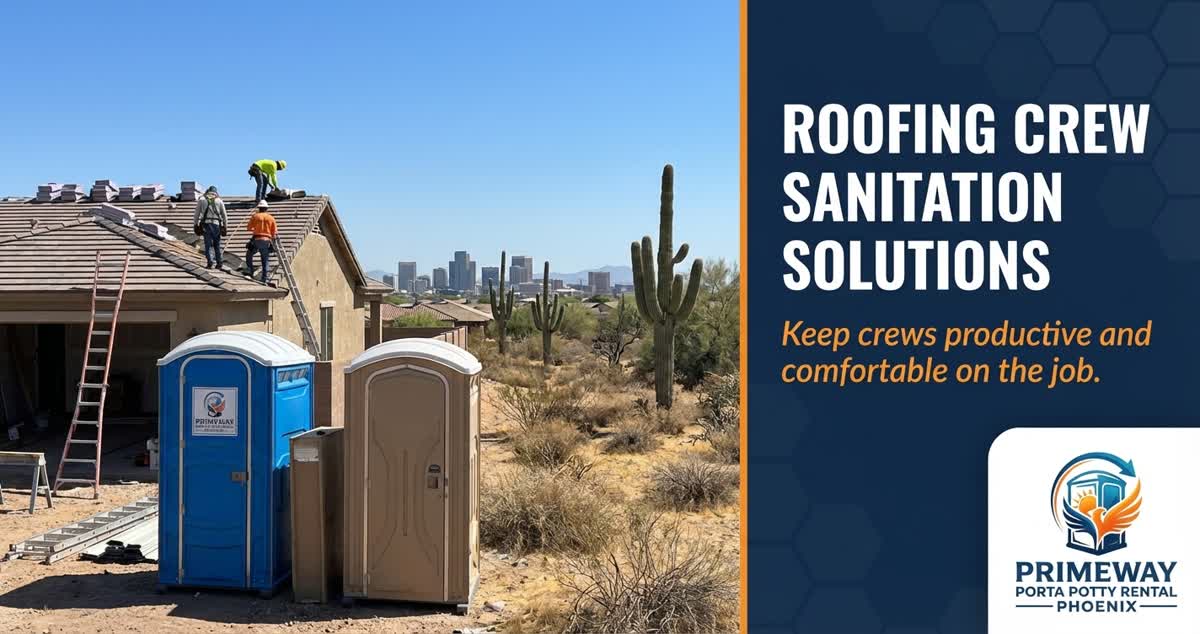
Roofing contractors and home renovation crews face a unique sanitation challenge: they work at heights, often on residential properties with limited space, while Phoenix's scorching summer sun makes every minute away from the job site count. When a roofer needs to descend three stories, cross a yard, and search for a distant bathroom, that's 15-20 minutes of lost productivity per visit.
At Primeway Porta Potty Rental Phoenix, we've supplied portable sanitation for hundreds of roofing projects and home renovations across the Valley. From Scottsdale estate re-roofs to Phoenix historic home renovations, we understand the specific needs of trades working on residential properties.
Why Roofing Sanitation Requires Special Attention
Roofing presents distinct challenges that general construction site planning doesn't address.
The Height Factor
Unlike ground-level construction, roofers work at elevation. Every bathroom break requires:
- Descending ladders or scaffolding safely
- Walking to restroom facilities
- Returning and climbing back to work elevation
- Re-establishing safety equipment connections
This process takes 10-20 minutes per break. On a crew of eight roofers taking three breaks daily, inadequate sanitation placement costs 4-8 hours of productivity per day—the equivalent of losing one worker entirely.
Phoenix Heat Complications
Phoenix roofing crews work in extreme conditions. Summer rooftop temperatures regularly exceed 140°F. In these conditions:
- Workers need more frequent hydration and corresponding bathroom access
- Extended trips away from roof shade increase heat exhaustion risk
- Fatigue from unnecessary climbing amplifies fall hazards
- Productivity plummets when workers avoid breaks due to inconvenience
Short-Duration, High-Mobility Projects
Residential roofing jobs typically last 1-5 days. Unlike long-term construction sites, this requires:
- Rapid deployment and pickup coordination
- Flexible scheduling around weather delays
- Minimal site disruption for homeowners
- Efficient relocation when working multiple homes in one neighborhood
OSHA Requirements for Roofing Sanitation
Residential roofing contractors often assume OSHA regulations don't apply to small crews or short projects. This assumption creates liability exposure.
Applicable Standards
OSHA 29 CFR 1926.51 applies to all construction work, including residential roofing. For detailed ADA requirements on temporary construction sites, see our ADA Compliance for Temporary Construction Sites guide:
- One toilet required per 20 workers (or fewer)
- Units must be readily accessible
- Facilities must be maintained in sanitary condition
- Hand washing provisions required
For a typical four-person roofing crew, OSHA requires at least one portable toilet. For crews of 5-20, one unit technically satisfies requirements, but practical considerations often warrant more.
Accessibility Interpretation
OSHA defines "readily accessible" based on travel time, not distance. For roofing crews, this means:
- Ground-level placement visible from the roof edge
- Maximum 2-3 minute round trip from work position
- Safe path of travel without tripping hazards
Placing a porta potty at the street while working on a third-story roof likely violates OSHA's accessibility standard.
Documentation and Compliance
OSHA inspectors increasingly visit residential job sites, especially after complaints or incidents. Maintain:
- Rental agreements showing compliant unit counts
- Service records proving regular cleaning
- Photos showing proper placement
Fines for sanitation violations can exceed $15,000—far more than the cost of adequate portable toilet service.
Strategic Placement for Roofing Projects
Optimal porta potty placement for roofing requires balancing accessibility, safety, and property protection.
Proximity Principles
Position units:
- Within 50 feet of the primary ladder access point
- Visible from the roof edge to minimize search time
- On stable, level ground that won't shift under ladders
- Away from hazards like power lines or overhead work zones
Surface Considerations
Roofing equipment and materials create unique ground conditions:
- Avoid placement on loose gravel that shifts underfoot
- Use plywood or rubber mats on decorative surfaces
- Position away from areas where shingles or debris may fall
- Ensure adequate drainage to prevent standing water
Homeowner Relations
Residential roofing brings property owner concerns:
- Position units where visible from the house is minimized
- Use mats or plywood to protect landscaping
- Avoid blocking driveways when possible
- Coordinate placement timing with homeowner schedules
Clear communication with homeowners about porta potty placement prevents mid-project complaints and relocations.

Home Renovation Sanitation Challenges
Interior renovation projects face different constraints than new construction or roofing.
Space Constraints
Urban Phoenix renovations often have minimal yard space:
- Historic districts like Willo and Encanto have small lots
- Alley access may be required for unit placement
- HOA restrictions may limit visible equipment
- Parking limitations affect service truck access
Interior vs. Exterior Access
Renovation crews working inside need different logistics:
- Ground-floor renovations may allow temporary indoor plumbing use
- Second-story work requires exterior porta potty placement
- Historic homes may have preserved bathrooms that crews cannot use
- Dust containment may limit interior travel routes
Neighbor Considerations
Attached housing and close lots create neighbor relations concerns:
- Position units away from neighbor windows and outdoor spaces
- More frequent service prevents odor issues affecting adjacent properties
- Minimize visibility from neighboring properties
- Coordinate delivery and pickup timing with quiet hours
Seasonal Scheduling for Phoenix Roofing
Phoenix's climate dictates roofing schedules and corresponding sanitation planning.
Peak Season (October-April)
Ideal roofing weather creates high demand:
- Book porta potties 1-2 weeks in advance during busy periods
- Standard service intervals (1-2x weekly) usually sufficient
- More flexible scheduling around weather delays
- Units placed in sun are tolerable in moderate temperatures
Summer Challenges (May-September)
Extreme heat creates special requirements:
- Seek shade placement or provide temporary shading
- Increase service frequency to twice weekly minimum
- Consider upgraded units with enhanced ventilation
- Early morning delivery and pickup preferred
- Units in direct sun can become unusable by midday
Many roofing contractors minimize summer operations, but emergency repairs and some commercial projects continue. When they do, sanitation requires extra attention.
Monsoon Season (July-September)
Sudden severe storms affect roofing projects:
- Secure units with tie-downs or position against structures
- Monitor weather forecasts for delivery/pickup timing
- Ensure adequate drainage around units
- Have backup plans for weather-related schedule changes
Equipment Selection for Roofing and Renovation
Not all porta potties suit roofing and renovation needs equally.
Standard Units
For most residential roofing and renovation projects, construction-grade standard units provide adequate service. Features to prioritize:
- Reinforced construction for frequent door use
- Good ventilation for odor control
- Hand sanitizer dispensers
- Non-slip floors for workers in boots
High-Rise Options
For multi-story projects, specialized equipment may help:
- Lift-attachable units for crane positioning (commercial projects)
- Compact units for tight residential spaces
- Units with external occupancy indicators for crew coordination
Hand Wash Stations
Roofing tar, adhesives, and sealants make hand washing essential. Freestanding hand wash stations positioned near porta potties:
- Provide running water for removing chemical residues
- Help crews maintain cleanliness for lunch breaks
- Support professional appearance when interacting with homeowners
Cost Management for Roofing Contractors
Residential roofing operates on thin margins. Efficient sanitation planning controls costs without compromising compliance.
Short-Term Rental Strategies
For 1-5 day roofing projects:
- Coordinate delivery day before or morning of project start
- Schedule pickup for day after completion to allow final cleanup
- Bundle multiple neighborhood jobs to share delivery costs
- Weekly minimums often apply—maximize value by consolidating jobs
Longer Renovation Projects
For renovations spanning weeks or months:
- Monthly rates offer better value than weekly renewals
- Negotiate service frequency based on actual crew size
- Remove units during phases when crews are off-site
Working with Homeowners and HOAs
Successful residential roofing and renovation sanitation requires stakeholder management.
Homeowner Communication
Before placing porta potties:
- Discuss placement location and show on property diagram
- Explain service schedule and what to expect
- Provide contact information for concerns
- Address specific property concerns (sprinkler systems, landscaping)
HOA Coordination
Many Phoenix-area neighborhoods have HOAs with equipment restrictions:
- Review CC&Rs for porta potty restrictions before contracting
- Obtain necessary approvals in writing
- Position units to minimize visibility from streets
- Maintain pristine unit condition to avoid complaints

Safety Integration
Porta potty placement affects overall job site safety beyond basic sanitation.
Fall Protection Considerations
Bathroom break routes should:
- Avoid crossing active work zones with falling debris
- Use protected pathways where possible
- Minimize ladder transitions (a common accident point)
Heat Safety
In Phoenix's extreme heat, porta potties should:
- Be positioned to minimize sun exposure during midday
- Include shaded areas for brief cooling breaks
- Stay within close proximity to reduce heat exposure during breaks
Conclusion
Roofing and home renovation sanitation requires balancing OSHA compliance, productivity optimization, and residential property considerations. The unique challenges of height, heat, and homeowner relations demand thoughtful planning that general construction site approaches don't address.
By positioning units strategically, selecting appropriate equipment, and communicating clearly with homeowners and crews, roofing and renovation contractors can maintain compliance while protecting productivity. In Phoenix's demanding climate, proper sanitation isn't just a regulatory requirement—it's a competitive advantage that keeps crews working efficiently.
Primeway Porta Potty Rental Phoenix understands the unique demands of residential roofing and renovation work. From rapid deployment for emergency repairs to long-term partnerships with established contractors, we provide the flexible, reliable service that keeps Phoenix roofing crews productive and compliant.
Roofing or Renovation Project in Phoenix?
Fast delivery for roofing contractors. Call for a free quote tailored to your residential project needs.
Call (602) 669-0858Related Reading: Learn about porta potties for road construction and portable hand wash stations for job sites.