Key Takeaways
- Road construction projects face unique porta potty challenges including limited access and high-speed traffic zones
- OSHA requires one toilet per 20 workers, with additional units for crews spread across long stretches
- Highway projects often require specialized units with enhanced stability and safety features
- Strategic placement minimizes lost productivity while ensuring worker safety and compliance
- Long-term rental agreements with flexible service schedules keep highway projects running smoothly
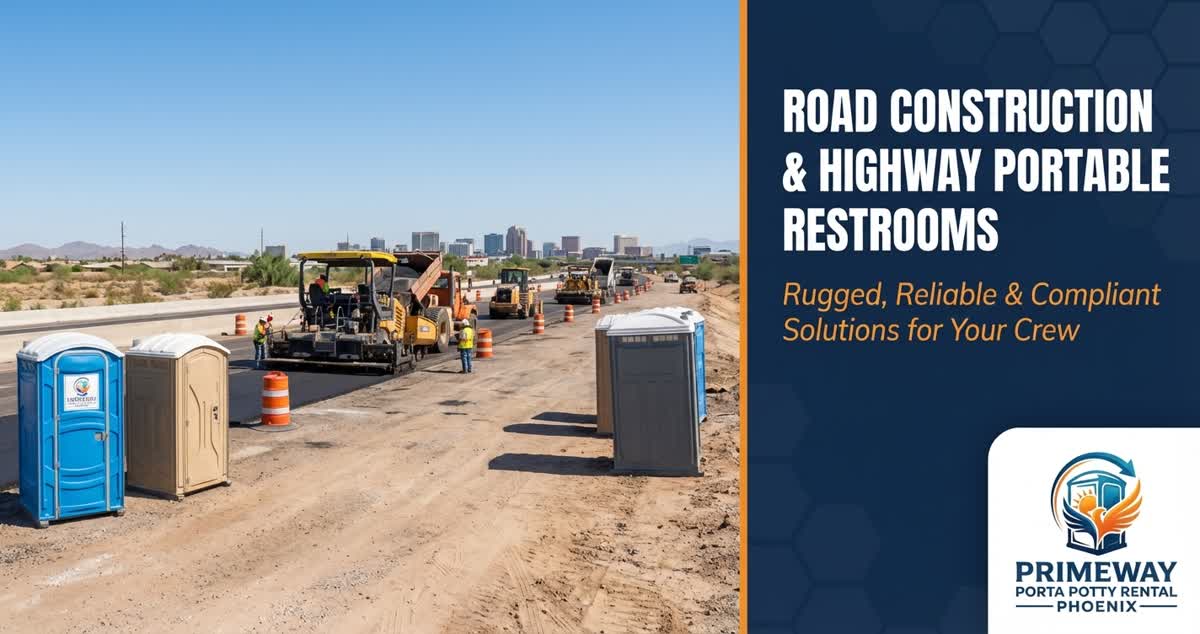
Road construction and highway projects present some of the most demanding conditions for portable sanitation in the construction industry. From the Loop 101 expansion projects to the I-10 widening initiatives around Phoenix, these long-duration projects span miles of terrain, face extreme weather conditions, and must keep crews productive while maintaining strict safety standards.
At Primeway Porta Potty Rental Phoenix, we've supplied portable restrooms for major highway construction projects throughout Maricopa County. This guide draws from our experience serving Arizona Department of Transportation (ADOT) contractors, municipal road crews, and private highway developers to help you plan effective portable sanitation for your next road construction project.
Unique Challenges of Road Construction Sanitation
Unlike building construction sites where crews work in relatively contained areas, road construction projects stretch across extensive linear distances. This geographic spread creates logistical hurdles that standard construction site planning doesn't address.
The Distance Problem
When your crew is working on a five-mile stretch of highway, placing a single bank of porta potties at one end forces workers to travel significant distances for bathroom breaks. On a hot Phoenix summer day, this isn't just inconvenient—it's a productivity killer and heat safety risk.
Studies from the Associated General Contractors of America show that workers who must walk more than five minutes to reach restroom facilities take longer breaks and experience more fatigue. On highway projects where every minute of lane closure counts, these delays compound quickly.
Traffic Speed and Safety Zones
Highway construction zones operate adjacent to traffic moving at high speeds. ADOT and the Federal Highway Administration require specific clear zones and barriers between workers and live traffic. Your porta potty placement must account for:
- Minimum setback distances from travel lanes (typically 30+ feet)
- Protection from errant vehicles using concrete barriers or crash cushions
- Visibility for truck drivers making service visits
- Emergency vehicle access requirements
Extreme Environmental Exposure
Road construction porta potties sit in exposed locations without the shade of buildings or temporary structures. Phoenix's climate adds additional stress:
- Summer temperatures exceeding 115°F accelerate odor development
- Intense UV exposure degrades plastic components faster
- Monsoon winds can topple improperly secured units
- Blowing dust and debris from passing vehicles require more frequent cleaning
OSHA Requirements for Highway Construction Sites
The Occupational Safety and Health Administration's construction sanitation standards apply equally to road projects, but implementation requires additional planning.
Minimum Toilet Requirements
OSHA 29 CFR 1926.51 mandates:
| Number of Workers | Minimum Toilets Required |
|---|---|
| 20 or fewer | 1 toilet |
| 20+ workers | 1 toilet per 20 workers |
| 200+ workers | 1 toilet per 35 workers |
However, for highway projects, these minimums often prove insufficient due to crew dispersion. We recommend increasing unit counts by 25-50% for projects where crews work more than 1,000 feet apart.
Service Frequency Requirements
OSHA requires that portable toilets be serviced often enough to maintain sanitary conditions. For Phoenix highway projects during summer months, this typically means:
- Standard construction units: 2-3 times per week
- High-traffic areas (flagging stations, batch plants): Daily service
- Units with hand sanitizer refills: Weekly minimum
Holding tank rentals can extend service intervals for remote locations where pump truck access is limited to specific times.
Strategic Placement for Highway Projects
Effective porta potty placement on road construction sites requires balancing OSHA compliance, worker convenience, and traffic safety.
Zone-Based Placement Strategy
Divide your project into logical zones based on crew assignments:
Paving Operations Zone: Place units near the paver staging area but outside the active paving lane. These units serve the paving crew, roller operators, and truck drivers waiting to dump asphalt.
Grading and Excavation Zone: Earthmoving crews work ahead of paving operations. Position units near equipment staging areas, ensuring they're accessible to motor graders, excavators, and dump trucks without crossing active work zones.
Traffic Control Zone: Flaggers and traffic control personnel cannot leave their posts for extended periods. Dedicated units near flagging stations, rotated throughout the shift, prevent workers from choosing unsafe alternatives.
Batch Plant/Staging Area: Your material storage and equipment yard serves as the natural hub for sanitation facilities. This area typically offers the best access for service trucks and can accommodate larger unit banks.
Accessibility Requirements
Federal ADA requirements and Arizona state regulations require accessible restroom facilities on all public works projects. For highway construction:
- Minimum one ADA-compliant unit per toilet bank
- Accessible routes free from tripping hazards
- Units positioned on firm, stable surfaces
- Clear space for wheelchair maneuvering
Specialized Equipment for Highway Projects
Standard porta potties work for many applications, but highway projects often benefit from specialized solutions.
High-Wind Rated Units
Arizona's monsoon season brings sustained winds of 40-60 mph with gusts exceeding 70 mph. Standard porta potties can become dangerous projectiles in these conditions. Construction-grade units designed for highway use feature:
- Reinforced wall construction
- Extended base skirts for ballast
- Integrated tie-down points
- Heavier overall construction
Holding Tanks for Remote Locations
When your grading crew works five miles from the nearest paved access road, standard service intervals become impractical. Large-capacity holding tanks allow units to operate for weeks between pump-outs.
A 250-gallon holding tank paired with a standard porta potty effectively triples waste capacity, reducing service frequency from twice weekly to once weekly. For extremely remote locations, 500-gallon tanks provide even longer intervals.
Hand Wash Stations
Highway construction involves handling asphalt, concrete, and various petroleum products. Workers need effective hand washing, not just sanitizer. Freestanding hand wash stations positioned near porta potty clusters provide:
- Running water for removing chemical residues
- Soap dispensers with antibacterial formulation
- Paper towel dispensers
- Capacity for 500+ hand washes between refills

Seasonal Considerations for Arizona Highway Projects
Phoenix's extreme climate affects both worker needs and equipment performance throughout the year.
Summer Operations (May-September)
Temperatures regularly exceed 110°F during peak construction season. These conditions demand:
- Increased unit counts to reduce wait times (workers dehydrated from heat need facilities more frequently)
- More frequent servicing to combat accelerated odor development
- Shaded placement where possible, or units with built-in ventilation
- Additional hand wash stations for cooling and hygiene
- Extra water reserves for hand wash and eyewash stations
Winter Operations (December-February)
While mild compared to other regions, Phoenix winters bring challenges:
- Occasional freezing temperatures requiring winterized units
- Shorter daylight hours affecting service scheduling
- Rain events creating muddy conditions around units
Monsoon Season (July-September)
Sudden severe storms require contingency planning:
- Units secured with ground anchors or barrier protection
- Elevation on platforms in flood-prone areas
- Backup units staged for rapid replacement if damage occurs
- Flexible service schedules accommodating weather delays
Coordination with ADOT and Municipal Requirements
Public highway projects involve additional compliance layers beyond OSHA.
ADOT-Specific Requirements
Arizona Department of Transportation projects typically specify:
- Minimum unit counts in contract documents
- Service frequency requirements
- Placement restrictions within the clear zone
- Removal timelines when phases complete
Review your project's Special Provisions thoroughly. ADOT inspectors will verify compliance during routine site visits.
Municipal Variations
Cities within Maricopa County may impose additional requirements:
- Phoenix: Enhanced ADA requirements for public projects
- Scottsdale: Aesthetic restrictions in scenic corridors
- Mesa: Specific placement distances from residential areas
- Glendale: Additional service documentation requirements
Cost Planning for Highway Project Sanitation
Budgeting for road construction sanitation requires accounting for factors that don't apply to building construction.
Distance Charges
Projects far from service provider locations incur additional transportation costs. When calculating porta potty rental costs for remote highway locations, factor in:
- Additional fuel surcharges for distant sites
- Travel time costs for service technicians
- Potential overnight charges for multi-day service routes
Long-Term Rental Economics
Most highway projects run six months to three years. Long-term rentals offer significant savings through:
- Reduced daily rates for extended commitments
- Locked-in pricing protecting against inflation
- Flexible unit rotation as project phases progress
- Consolidated billing reducing administrative overhead
Productivity ROI
The cost of adequate sanitation pales compared to productivity losses from inadequate facilities. Studies show that well-placed porta potties can save 15-20 minutes per worker per day. On a 50-person crew working 250 days annually, that's over 3,000 hours of recovered productivity.
Best Practices from Phoenix Highway Projects
Drawing from our experience with major Phoenix-area highway construction, these practices consistently deliver results:
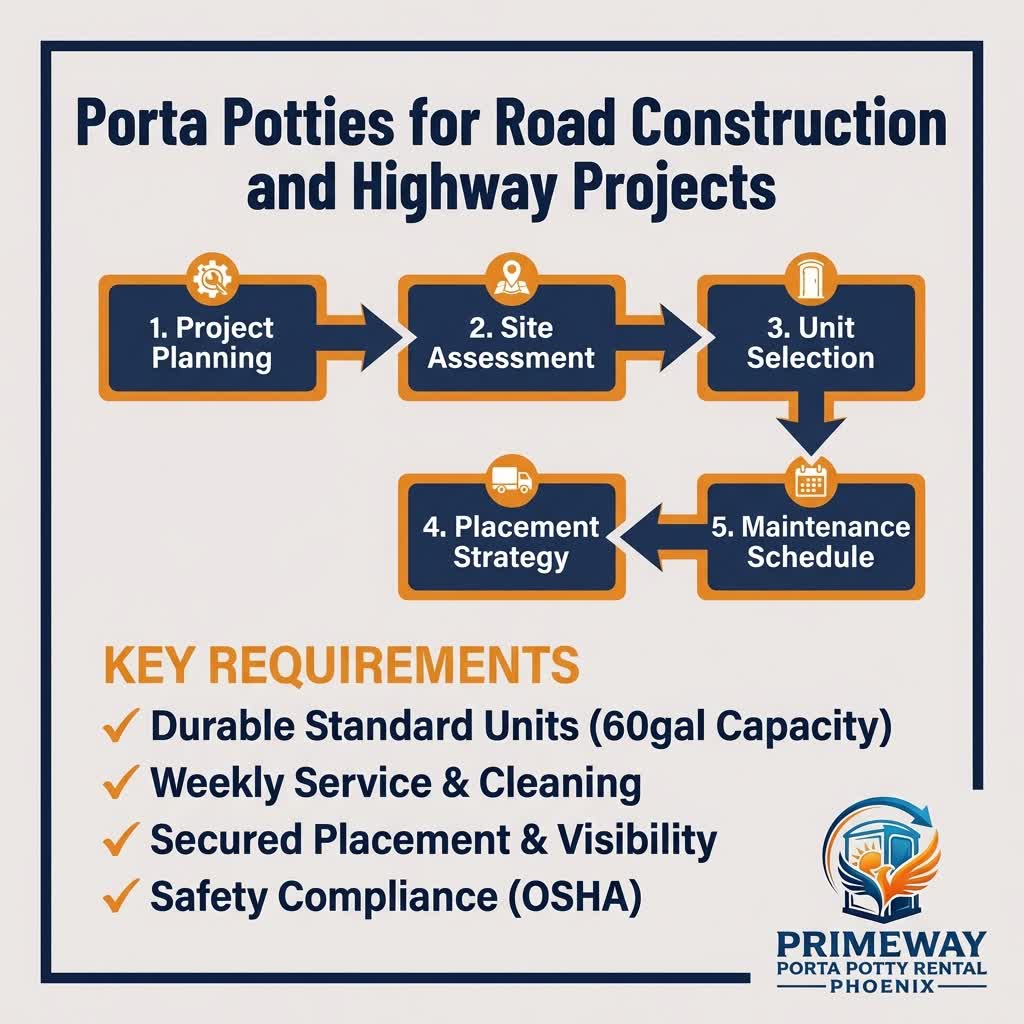
Pre-Project Planning
Include your portable sanitation provider in pre-construction meetings. Site visits allow identification of:
- Optimal unit placement locations
- Service vehicle access routes
- Utility conflicts (underground lines, overhead clearance)
- Staging areas for spare units and supplies
Communication Protocols
Establish clear communication channels between field supervisors and your sanitation provider:
- Daily reporting of unit conditions
- Emergency contact numbers for immediate issues
- Weekly planning calls to adjust for schedule changes
- Monthly reviews of service quality and billing
Contingency Planning
Highway projects face disruptions. Maintain:
- 10-15% spare unit capacity for peak crew periods
- Emergency response agreements for unit damage or contamination
- Backup service providers for critical situations
- Rapid relocation capabilities as work zones shift
Environmental Compliance and Sustainability
Modern highway construction increasingly emphasizes environmental stewardship, and portable sanitation plays a role.
Waste Handling Requirements
All waste from portable toilets must be disposed of at licensed wastewater treatment facilities. Reputable providers maintain documentation proving proper disposal, essential for:
- Environmental compliance audits
- LEED certification documentation
- ADOT environmental compliance reporting
- Stormwater pollution prevention plans
Green Options
Sustainable sanitation options now available include:
- Solar-powered hand wash stations
- Waterless urinals reducing overall waste volume
- Biodegradable deodorizers and cleaning products
- Units constructed from recycled materials
Conclusion
Road construction and highway projects demand portable sanitation solutions that address unique logistical, safety, and environmental challenges. Success requires planning that accounts for crew dispersion, traffic safety, extreme weather, and regulatory compliance.
Working with an experienced provider who understands Arizona highway construction requirements ensures your project maintains productivity, protects worker health, and meets all regulatory obligations. The investment in proper planning and adequate unit counts pays dividends through improved efficiency and reduced risk.
For highway projects throughout Phoenix and Maricopa County, Primeway Porta Potty Rental Phoenix provides specialized solutions tailored to road construction demands. From initial planning through project completion, we ensure your sanitation infrastructure supports your construction goals.
Need Porta Potties for Your Highway Project?
Same-day delivery available. Call for a free quote tailored to your road construction needs.
Call (602) 669-0858Related Reading: Learn more about long-term porta potty rentals for commercial construction projects and OSHA portable toilet requirements for construction sites.