Key Takeaways
- Long-term rentals (6+ months) typically offer 30-50% savings compared to monthly renewals
- Multi-phase projects benefit from flexible unit rotation and relocation clauses
- Service frequency should adjust as crew sizes change across project phases
- Annual contracts with rate locks protect against seasonal price increases
- Equipment upgrade provisions keep units fresh throughout extended projects
Commercial construction projects in Phoenix—from high-rise developments downtown to industrial warehouses in Mesa—typically span 12 to 36 months. These extended timelines create unique challenges for portable sanitation planning that short-term event rentals don't address.
At Primeway Porta Potty Rental Phoenix, we've supported commercial construction projects ranging from six-month tenant improvements to multi-year master-planned communities. This guide shares the strategies that keep long-term projects compliant, cost-effective, and hassle-free.
Understanding Long-Term vs. Short-Term Rentals
The portable sanitation industry generally defines rental terms as:
| Term | Duration | Typical Use Case |
|---|---|---|
| Short-term | 1-7 days | Events, weekend projects |
| Weekly | 1-4 weeks | Short renovations, temporary needs |
| Monthly | 1-6 months | Seasonal construction, medium projects |
| Long-term | 6+ months | Commercial construction, infrastructure |
Long-term rentals require different contract structures, service planning, and relationship management than short-term needs. Understanding these differences helps you negotiate better agreements and avoid mid-project complications.
Pricing Structures for Extended Rentals
Long-term porta potty pricing follows several models, each with distinct advantages for different project types.
Tiered Monthly Rates
The most common long-term pricing structure features decreasing rates as commitment length increases:
- Months 1-6: Standard monthly rate
- Months 7-12: 10-15% reduction
- Months 13-24: 20-25% reduction
- Months 25+: 30-40% reduction
This structure rewards your extended commitment while allowing the provider to recover initial delivery costs early in the rental term.
Annual Contract with Rate Lock
For projects with defined 12-month scopes, annual contracts offer:
- Fixed pricing immune to seasonal rate increases
- Simplified monthly billing
- Pre-negotiated service parameters
- Automatic renewal options with inflation adjustments
Annual contracts particularly benefit projects starting in fall when rates typically rise for the busy spring construction season.
Per-Unit vs. Bundled Pricing
Consider which pricing model fits your project:
Per-Unit Pricing: Each unit type carries its own rate. Standard units cost less than high-rise units. This model works when your unit mix remains constant.
Bundled Pricing: A single rate covers your entire sanitation setup regardless of unit types. This simplifies billing and allows flexible equipment swaps without renegotiation.
Service Scheduling for Multi-Month Projects
Long-term projects experience crew size fluctuations, seasonal changes, and varying intensity that should inform service planning.
Dynamic Service Adjustments
Rather than fixed service schedules, negotiate adjustment provisions:
- Weekly service during peak crew periods (50+ workers)
- Bi-weekly service during normal operations
- Weekly service during Phoenix summers (odor control)
- Monthly deep-cleaning rotations
Include written procedures for requesting schedule changes. Most providers accommodate reasonable adjustments with 48-hour notice.
High-Rise Construction Considerations
As buildings rise, vertical logistics complicate service:
- Ground-level units serve trades working on lower floors
- Elevator-transported units serve mid-rise work zones
- Swing-stage or crane-lifted units serve upper floors
Long-term contracts should specify procedures for vertical unit relocation as construction progresses. Specialized high-rise units designed for crane lifting and elevator transport streamline these transitions.
Planning for Multi-Phase Projects
Commercial developments rarely proceed linearly. Your sanitation plan should accommodate:
Phase Transitions
A typical commercial project includes distinct phases with different crew profiles:
Site Work Phase (Months 1-3): Heavy equipment operators and grading crews dominate. Fewer workers, but they need accessible units spread across large areas. Holding tanks may extend service intervals for remote grading zones.
Structural Phase (Months 4-12): Concrete and steel crews arrive. Crew sizes peak at 75-150 workers. Multiple floor levels require vertical distribution of units.
Envelope Phase (Months 10-15): Window, roofing, and facade trades require exterior access. Ground-level unit counts may decrease as workers concentrate on upper floors.
Interior Phase (Months 14-24): Mechanical, electrical, plumbing, and finish crews work inside. Units concentrate near building entries and service elevators.
Equipment Rotation Strategies
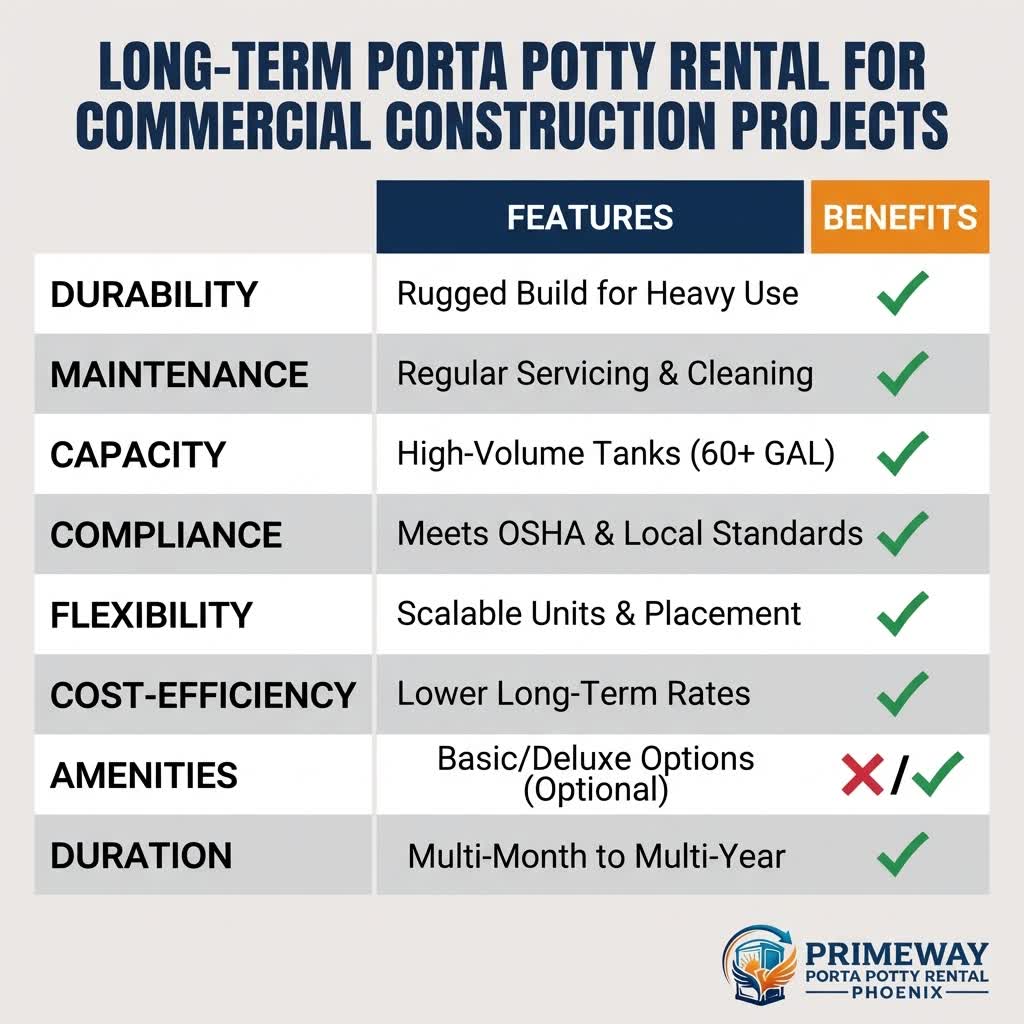
Units degrade over time despite regular service. Long-term contracts should include:
- Annual unit replacement for projects exceeding 12 months
- Mid-project deep cleaning and refurbishment
- Upgrade options if initial unit selections prove inadequate
- Rotation schedules that swap heavily used units with fresh ones
Fresh equipment mid-project improves worker satisfaction and reduces odor complaints.
Crew Size Fluctuations and Unit Scaling
OSHA requires one toilet per 20 workers (or per 35 for crews over 200). As commercial construction crews expand and contract, your unit count should adjust accordingly.
Scaling Up
When major trades arrive:
- Pre-position additional units 1-2 weeks before crew expansion
- Include extra capacity (10-15% above minimum requirements)
- Increase service frequency to match higher usage
- Verify water and hand wash station capacity
Scaling Down
As crews complete their work:
- Remove excess units promptly to reduce costs
- Consolidate remaining units for efficient service
- Adjust cleaning schedules to match reduced usage
Your rental agreement should specify minimum notice periods for unit additions and removals, typically 48-72 hours.
Seasonal Adaptations for Phoenix Projects
Phoenix's extreme climate demands seasonal adjustments to long-term sanitation plans.
Summer Operations (May-September)
Temperatures regularly exceed 110°F, creating sanitation challenges:
- Increase service frequency by 50% during peak summer
- Position units to minimize direct sun exposure where possible
- Verify ventilation systems function properly
- Monitor deodorizer effectiveness—heat accelerates chemical breakdown
- Increase hand wash station capacity for cooling needs
Winter Operations (December-February)>
Mild winters require different planning:
- Reduced service frequency may be acceptable
- Occasional freeze protection for water-based hand wash stations
- Rain preparation for units on unpaved surfaces
- Shorter daylight hours affecting service scheduling
Monsoon Season (July-September)
Sudden severe storms require contingency plans:
- Secure all units with ground anchors or barrier protection
- Elevate units in flood-prone areas
- Maintain backup units for rapid replacement
- Flexible service schedules accommodating weather delays
Billing and Administrative Efficiency
Long-term projects generate substantial administrative overhead. Streamline with:
Consolidated Billing
Rather than individual invoices per unit, negotiate:
- Single monthly invoice covering all units and services
- Electronic billing with automatic payment options
- Detailed usage reports for budget tracking
- Job-cost allocation codes for accounting integration
Service Documentation
For construction projects requiring extensive compliance documentation:
- Monthly service logs with dates, times, and technician signatures
- Waste disposal manifests from licensed treatment facilities
- Equipment inventory reports
- Inspection readiness packages for OSHA audits
Managing Subcontractor Relationships
On large commercial projects, general contractors often coordinate sanitation for dozens of subcontractors. Effective management requires:
Clear Responsibility Assignment
Define who provides what:
- General contractor provides baseline units for common use
- Large subcontractors (concrete, steel) may provide dedicated units for their crews
- Specialty trades rely on general contractor-provided facilities
Union Considerations
Phoenix-area union contracts often specify:
- Minimum unit counts per trade
- Service frequency requirements
- Hand washing provisions
- ADA accessibility standards
Review applicable union agreements before finalizing your sanitation plan.
End-of-Project Planning
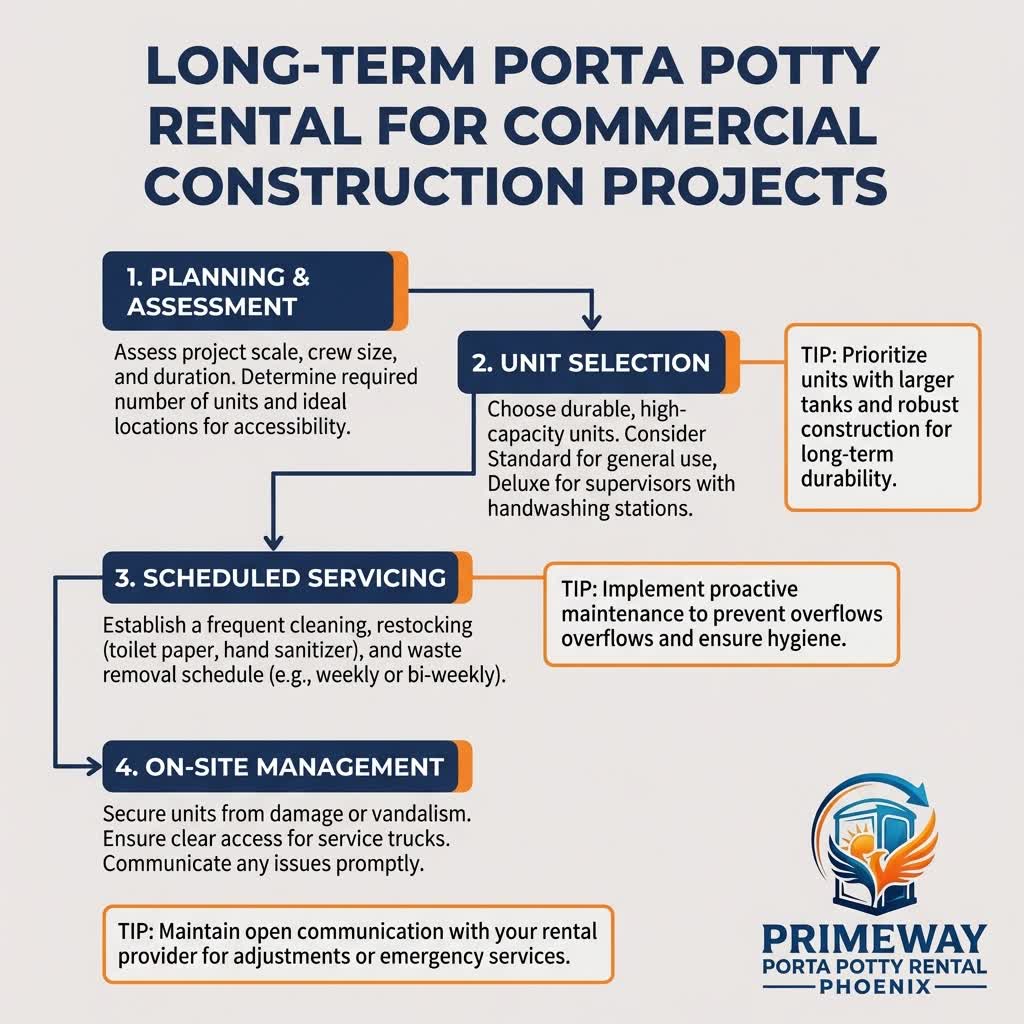
Long-term rentals require specific closeout procedures:
Unit Removal Coordination
- Schedule final unit pickup after certificate of occupancy inspection
- Leave minimal units for punch-list crews
- Coordinate timing with building activation and security changes
Final Documentation
- Final service logs confirming all units emptied and removed
- Waste disposal manifests for project record
- Final invoice reconciliation
- Equipment condition reports for any damage claims
Negotiating Your Long-Term Agreement
When finalizing long-term porta potty contracts, address these specific provisions:
- Rate escalation caps: Limit annual increases to CPI or fixed percentages
- Equipment replacement: Guarantee unit refresh schedules
- Service credits: Define compensation for missed services
- Termination flexibility: Allow early termination without penalty for project delays or cancellations
- Subcontractor billing: Enable direct billing to major subcontractors if desired
Conclusion
Long-term porta potty rentals for commercial construction require strategic planning beyond simply securing units. Success depends on anticipating crew fluctuations, seasonal demands, and project phase transitions while building flexible provider relationships.
Working with Primeway Porta Potty Rental Phoenix for your extended commercial project means gaining a partner who understands Phoenix construction cycles, maintains equipment quality throughout multi-year engagements, and adapts service as your project evolves.
The investment in proper long-term planning—negotiating favorable rate structures, establishing clear service parameters, and building contingency flexibility—pays dividends through reduced administrative burden, predictable costs, and consistent compliance throughout your project's duration.
Planning a Long-Term Construction Project?
Get a customized quote for your commercial construction timeline. Same-day delivery available.
Call (602) 669-0858Related Reading: Explore porta potties for road construction projects and how to choose the right porta potty provider.