Key Takeaways
- Phoenix ranks among the fastest-growing metro areas, driving massive construction demand
- OSHA requires 1 toilet per 10 workers on construction sites
- Holding tanks extend service capacity for large-scale developments
- Strategic porta potty placement improves worker productivity by reducing walk times
- Primeway Porta Potty Rental Phoenix specializes in multi-unit construction site solutions
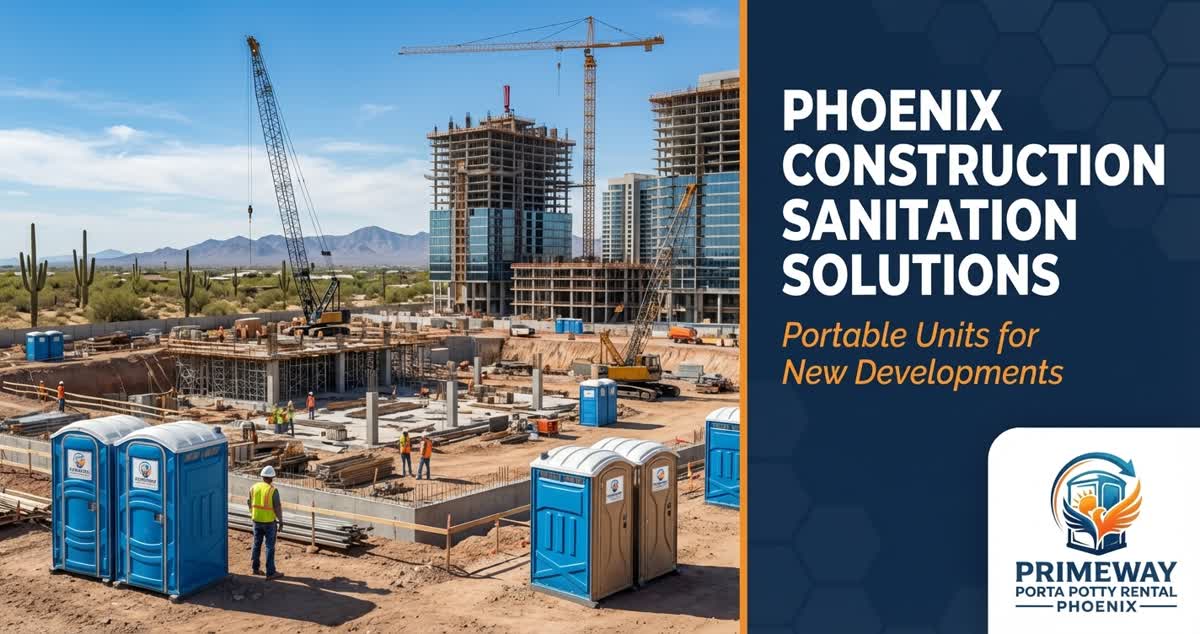
The Phoenix metropolitan area is experiencing one of the most significant construction booms in modern American history. From Primeway Porta Potty Rental Phoenix, we've witnessed firsthand how this rapid development has transformed the landscape from Desert Ridge to South Mountain, with new residential communities, commercial complexes, and infrastructure projects reshaping the Valley of the Sun. Behind every crane and concrete pour lies an essential yet often overlooked component of any successful construction project: portable sanitation.
Construction site managers across Maricopa County face a critical challenge—maintaining adequate restroom facilities that keep workers productive while meeting strict regulatory requirements. As the region's trusted portable sanitation provider, we understand the unique demands that Phoenix's construction boom places on developers, general contractors, and project managers.
Understanding Phoenix's Construction Explosion
The numbers tell a compelling story. Phoenix consistently ranks among the top five fastest-growing large cities in the United States, with population growth driving demand for housing, retail space, and infrastructure improvements. Major developments like the revitalization of downtown Phoenix, the expansion of semiconductor manufacturing facilities in the East Valley, and ongoing residential construction throughout suburbs like Gilbert, Chandler, and Surprise create a constant need for construction-grade portable restrooms.
This growth isn't slowing down. Industry analysts project continued expansion through 2026 and beyond, with billions of dollars in new development breaking ground across the metropolitan area. Each of these projects requires comprehensive portable sanitation planning from day one of site preparation through final inspections.
OSHA Requirements and Worker Welfare
The Occupational Safety and Health Administration maintains strict standards for construction site sanitation. These regulations aren't bureaucratic hurdles—they protect worker health, maintain productivity, and keep projects compliant. OSHA Standard 1926.51 mandates:
- One toilet seat per 15 workers for projects with 15 or fewer employees
- One toilet seat and one urinal per 40 workers for projects with 16 to 150 employees
- One toilet seat and one urinal per 50 workers for projects exceeding 150 employees
- Facilities must be readily accessible, typically meaning no more than a 10-minute walk from any work location
During Phoenix's scorching summer months, accessible restroom facilities become even more critical. Workers need frequent hydration, which increases restroom usage. Dehydration risks make proper sanitation facilities not just a compliance issue but a genuine safety concern. Our construction-grade units feature ventilation systems designed specifically for desert climates, helping maintain comfortable interior temperatures even when outdoor thermometers exceed 115 degrees.
The Scale Challenge: Large Developments Require Strategic Planning
Large-scale developments present unique portable sanitation challenges. A master-planned community spanning hundreds of acres or a multi-phase commercial project requires more than simply placing units at convenient locations. Project managers must consider:
Unit Quantity and Placement
Calculating the right number of units prevents both unnecessary rental costs and insufficient facilities. We recommend assessing peak workforce numbers, shift schedules, and site layout before ordering. Strategic placement minimizes walk times while keeping units accessible to service vehicles. On sprawling developments, this often means establishing multiple sanitation clusters rather than centralizing all units.
Service Frequency and Holding Capacity
High-occupancy sites generate significant waste volumes. Holding tank rentals extend unit capacity between service visits, reducing the frequency of pump trucks needed on-site. This proves particularly valuable for remote developments where service access may be limited or for projects requiring minimal interruptions during critical construction phases.
Duration and Scaling
Construction timelines rarely remain static. Weather delays, supply chain issues, and change orders extend projects. Conversely, accelerated schedules may require additional units quickly. Working with a responsive local provider ensures you can scale sanitation services up or down as project needs evolve. For extended timelines, see our guide on Long-Term Porta Potty Rental for Commercial Construction Projects.
Specialized Solutions for Phoenix's Unique Environment
Phoenix's desert environment creates specific challenges that generic portable sanitation solutions simply don't address. Dust storms, extreme heat, and occasional monsoon flooding require specialized equipment and service protocols.
Our construction-grade units feature reinforced anchoring systems that withstand haboob winds that can exceed 60 miles per hour. Non-slip flooring prevents accidents during rare rain events. UV-resistant materials prevent the plastic degradation that plagues lower-quality units exposed to Arizona's intense sun.
Water conservation matters in the desert. Modern portable restrooms use significantly less water per flush than traditional plumbing while maintaining hygiene standards. For environmentally conscious developers, we offer eco-friendly service options that minimize chemical usage and maximize waste processing efficiency.
Cost Considerations and Budget Planning
Portable sanitation represents a relatively small portion of overall construction budgets—typically less than 0.5% of total project costs. However, poor planning creates unexpected expenses and compliance issues that delay projects and damage contractor reputations.
Factors affecting rental costs include:
- Number of units required based on workforce size
- Rental duration and service frequency
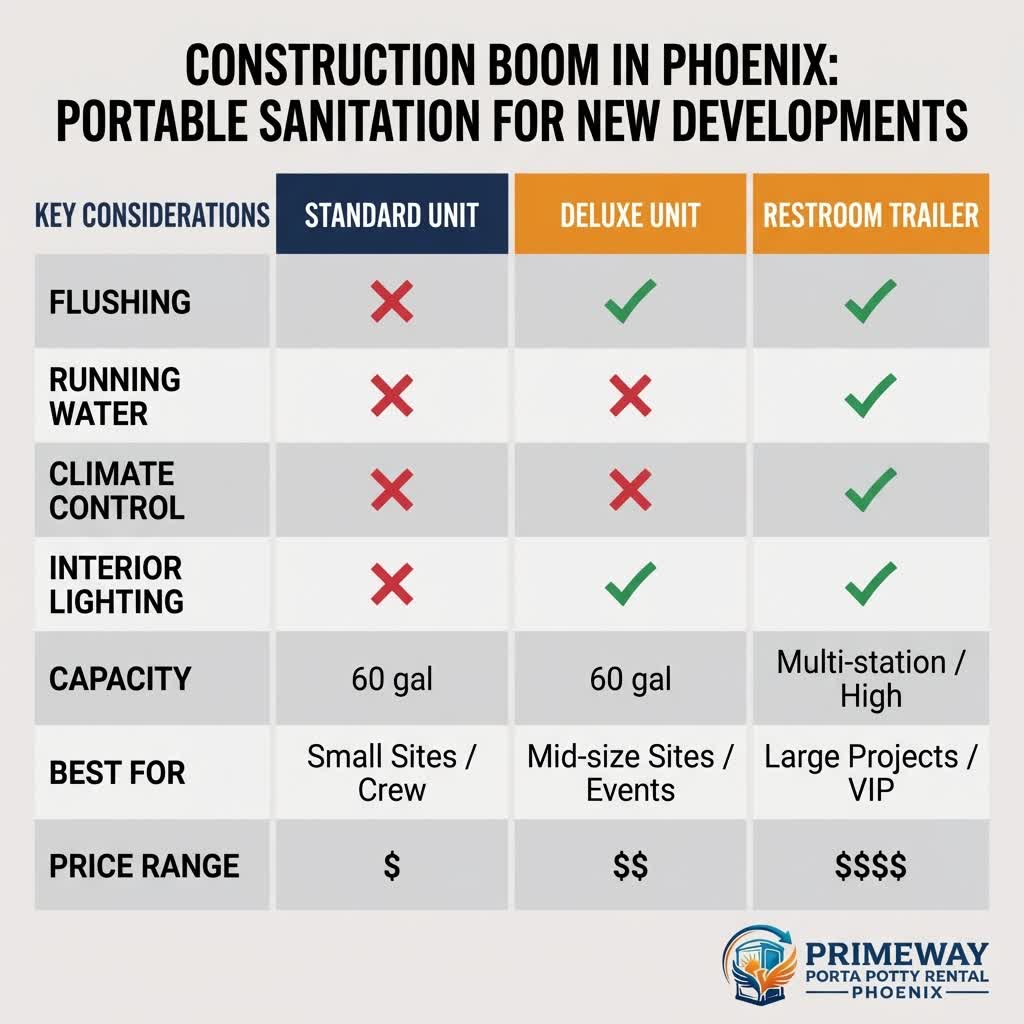
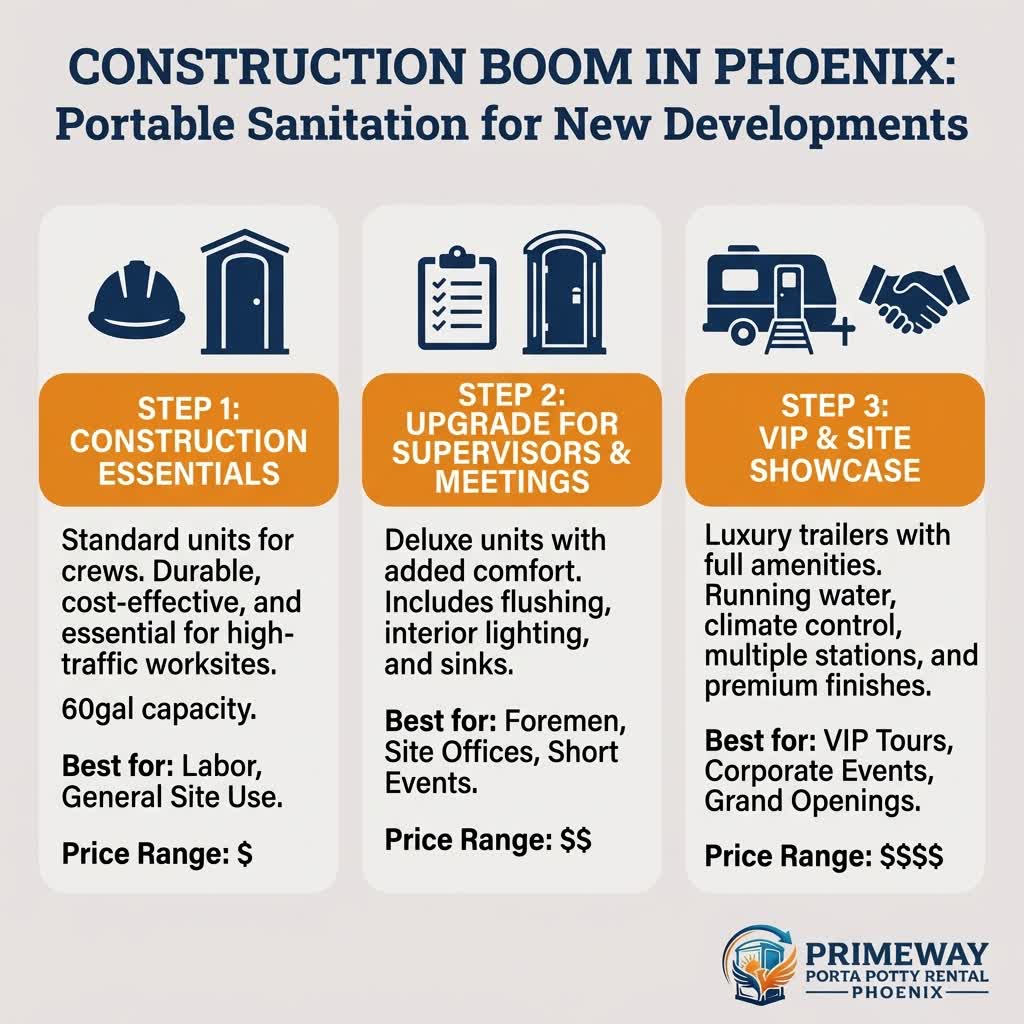
- Unit type (standard construction units vs. deluxe models with sinks)
- Site accessibility and distance from service centers
- Additional features like holding tanks, hand wash stations, or high-rise units
We provide detailed quotes that account for all these variables, helping project managers budget accurately without surprises. Volume discounts apply to large developments requiring multiple units over extended periods, making it cost-effective to maintain adequate facilities throughout project lifecycles.
Case Study: Multi-Phase Commercial Development
A recent project in the East Valley illustrates effective portable sanitation planning. A 200,000-square-foot commercial development required construction facilities for 18 months, with workforce numbers fluctuating between 40 and 120 workers depending on construction phase.
Our solution included:
- Initial placement of six construction-grade units with holding tanks
- Quarterly workforce assessments to adjust unit quantities
- Twice-weekly service during peak phases, weekly during slower periods
- Additional hand wash stations near break areas
- ADA-compliant unit placement near site entrance for accessibility
The result: zero compliance issues, minimal worker complaints, and a project completed on schedule. The general contractor noted that reliable sanitation services eliminated one variable they didn't need to worry about during an otherwise complex development.
Choosing the Right Portable Sanitation Partner
Not all portable restroom providers understand construction site requirements. When evaluating potential partners for your Phoenix development, consider:
Response Time: Construction schedules change rapidly. Can your provider add units within 24 hours if workforce increases? Do they offer emergency service if problems arise?
Local Knowledge: Providers familiar with Phoenix understand permit requirements, desert weather challenges, and the logistics of serving sprawling developments across the metropolitan area.
Equipment Quality: Construction sites demand rugged, well-maintained units that withstand heavy use and harsh conditions. Ask about cleaning protocols, maintenance schedules, and unit age.
Service Flexibility: Long-term projects require adaptable service plans. Look for providers willing to adjust frequencies, add units, or modify service as your project evolves.
Planning a Construction Project in Phoenix?
Get expert portable sanitation planning for your development. Same-day quotes available.
Call (602) 669-0858Looking Ahead: Phoenix's Continued Growth
The construction boom shows no signs of slowing. Major infrastructure investments, including transportation improvements and water management projects, will create additional demand for portable sanitation services through the remainder of this decade. Residential construction continues expanding into previously undeveloped areas, while infill projects densify established neighborhoods.
For developers and contractors, partnering with an experienced local portable sanitation provider isn't just about checking a compliance box—it's about ensuring project success. Reliable restroom facilities keep workers productive, healthy, and focused on their work rather than worrying about basic needs.
At Primeway Porta Potty Rental Phoenix, we've supported hundreds of construction projects across the Valley, from small residential renovations to massive commercial developments. Our understanding of Phoenix's unique construction environment, combined with responsive service and quality equipment, makes us the preferred choice for developers who refuse to compromise on worker welfare or regulatory compliance.
As you plan your next development, consider portable sanitation early in the process. Like concrete and steel, it's a fundamental building block of successful construction in America's hottest growing metro area.
Need help calculating porta potty requirements for your construction site? Check out our guide on calculating porta potty needs for large crews or learn about OSHA requirements for construction sites.