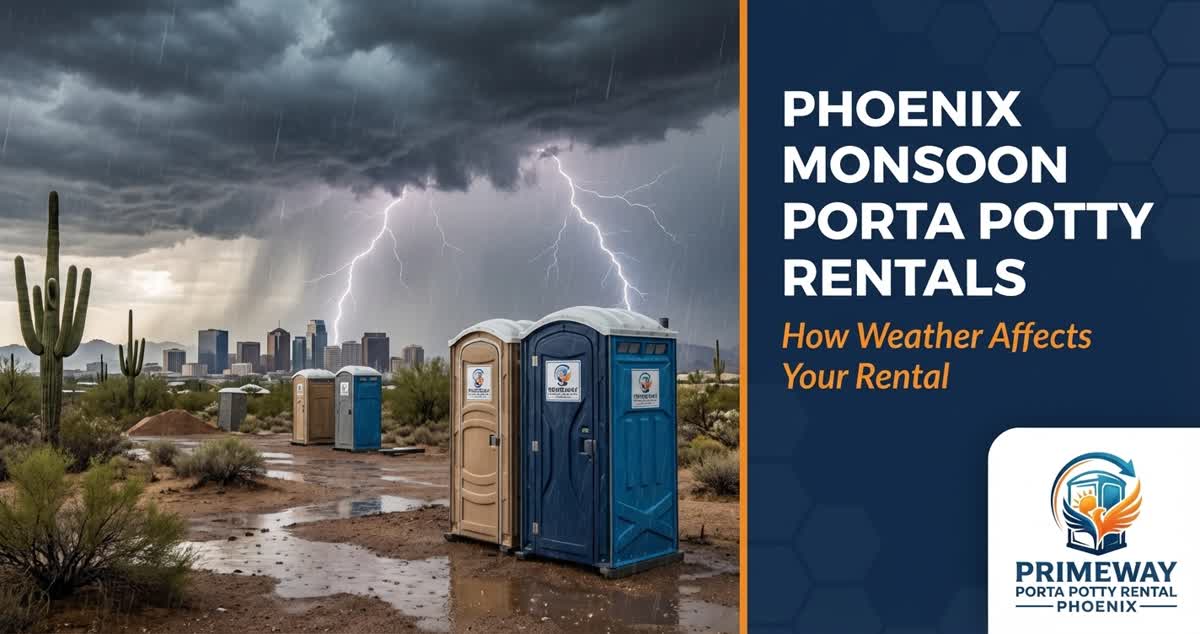
Every summer, Arizona transforms dramatically as the North American Monsoon awakens across the desert Southwest. From June 15 through September 30, Phoenix experiences a weather pattern unlike any other season—sudden violent thunderstorms, massive dust storms called haboobs, flash flooding, and extreme humidity that follows weeks of dry heat. For anyone managing porta potty rentals during these months, understanding monsoon dynamics isn't just helpful—it's essential for protecting equipment, maintaining service quality, and ensuring user safety.
At Primeway Porta Potty Rental Phoenix, we've navigated over a decade of monsoon seasons, learning how to keep portable sanitation operational through conditions that challenge even well-built equipment. This guide shares our expertise on monsoon preparedness, from anchoring techniques to emergency protocols that keep your job sites and events running smoothly when Arizona's most dramatic weather arrives.
Key Takeaways
- Monsoon season runs June 15-September 30 with thunderstorms, haboobs, and flash flooding
- Wind speeds can exceed 60 mph during dust storms, requiring secure anchoring systems
- Flash flooding poses the greatest risk to improperly placed units
- Increased humidity affects odor control and requires more frequent servicing
- Emergency protocols and rapid response capabilities are essential during severe weather
- Proper planning prevents costly damage and service interruptions
Understanding Phoenix's Monsoon Season
The North American Monsoon represents one of Earth's most dramatic seasonal weather shifts. Unlike the steady rains of tropical monsoons, Arizona's version delivers intense, localized thunderstorms born from extreme heat meeting moisture from the Gulf of California and Gulf of Mexico.
Monsoon Timeline and Patterns
Monsoon season officially begins June 15 and continues through September 30, though the most active period typically spans July through early September. The season progresses through distinct phases:
Early Season (Mid-June to Mid-July): Storms build gradually, often starting with isolated afternoon thunderstorms in the high country before moving to lower elevations. Early storms tend to produce more wind and dust than rain, creating haboob conditions as outflow boundaries race across the desert.
Peak Season (Mid-July to Late August): This period sees the most frequent and intense thunderstorms, with daily storm development becoming common. Rainfall totals peak, and flash flood risk reaches its highest levels. Moisture increases dramatically, creating oppressive humidity that follows weeks of bone-dry conditions.
Late Season (September): Storm frequency decreases as temperatures moderate, though tropical moisture from decaying Pacific hurricanes can trigger severe weather events. These late-season storms often deliver heavy rainfall concentrated in shorter periods.
Monsoon Hazards for Portable Sanitation
Monsoon weather creates multiple distinct challenges for porta potty operations:
Extreme Winds: Thunderstorm outflows and haboobs generate winds frequently exceeding 40-50 mph, with severe storms producing gusts over 70 mph. These winds can overturn unsecured units, damage structures, and spread debris across job sites.
Flash Flooding: Phoenix's hard desert ground absorbs water slowly, causing rapid runoff during intense rainfall. Dry washes transform into dangerous torrents within minutes. Units placed in flood-prone areas face submersion risk and potential structural damage.
Lightning: Arizona leads the nation in lightning strikes per capita, with Phoenix averaging over 500,000 cloud-to-ground strikes annually. Metal porta potty structures attract lightning, creating safety concerns for users during storms.
Extreme Humidity: Relative humidity can spike from 10% to over 80% during active monsoon periods. This humidity accelerates bacterial growth, intensifies odors, and challenges traditional deodorizing methods designed for dry conditions.
Dust and Debris: Haboobs carry massive amounts of fine dust that infiltrates sealed spaces, coats surfaces, and creates cleanup challenges. Debris carried by winds can damage unit exteriors and ventilation systems.
Securing Units Against Monsoon Winds
Wind represents the most immediate threat to porta potty stability during monsoon season. Proper anchoring transforms a potentially dangerous situation into a manageable one.
Anchoring Systems and Techniques
Standard porta potty installation assumes moderate wind conditions. Monsoon preparedness requires enhanced anchoring:
Ground Anchoring: Units should be secured using heavy-duty ground stakes driven deep into undisturbed soil. In areas with rocky or compacted ground, auger-style anchors provide better holding power. Multiple anchor points—typically four per unit—distribute wind loads evenly.
Weight-Based Stabilization: Where ground anchoring isn't feasible, weighted ballast systems using sandbags or concrete blocks add stability. These systems require sufficient weight—typically 200-400 pounds per unit—to resist overturning forces.
Tethering Systems: For luxury restroom trailers and larger structures, professional-grade tethering using ratchet straps connected to dedicated ground anchors provides superior wind resistance. These systems distribute forces across the structure's frame rather than relying on unit weight alone.
Wind-Resistant Placement Strategies
Strategic placement minimizes wind exposure:
- Position units on the leeward side of buildings or permanent structures when possible
- Avoid exposed hilltops and ridge lines where wind speeds amplify
- Create windbreaks using construction fencing, temporary barriers, or natural vegetation
- Orient unit doors away from prevailing storm directions
- Cluster units together—groups provide mutual stability compared to isolated placements
For construction sites with ongoing work, coordinate porta potty placement with site supervisors to ensure units remain accessible while benefiting from available wind protection.
Flash Flood Prevention and Response
Flash flooding causes more monsoon-related damage to porta potties than all other factors combined. Understanding flood dynamics prevents catastrophic losses.
Identifying High-Risk Areas
Before placing any units during monsoon season, assess the site for flood risk:
Desert Washes: These dry creek beds fill rapidly during storms. Even units placed well above the wash bed can flood if positioned on banks that erode or on overbank areas that receive diverted flow. Never place units in active washes or on banks within 50 feet of the channel.
Sheet Flow Areas: Flat desert terrain doesn't mean safe placement. During intense rainfall, water sheets across surfaces, collecting in low spots. Identify natural drainage patterns and avoid placing units where water converges.
Urban Drainage: Construction sites often alter natural drainage. New roads, building pads, and grading changes can redirect water toward previously safe areas. Review site plans and observe how water moves during initial storms.
Downstream Risk: Units don't need to be directly in flood paths to be affected. Debris flows, floating objects, and diverted drainage can damage units positioned near—but not in—flood-prone areas.
Elevated Placement Solutions
When flood-prone locations are unavoidable, elevation provides protection:
Built-Up Pads: Constructing compacted earth pads 12-18 inches above surrounding grade keeps units above typical sheet flooding. These pads require proper compaction to prevent erosion.
Platform Systems: Prefabricated platforms or custom-built wooden decks elevate units above flood levels while providing stable access. These systems work well for long-term construction rentals in flood-prone areas.
Portable Blocks: Interlocking concrete blocks or specialized leveling systems can raise units several inches to feet above grade. These modular solutions allow adjustment as conditions change.

Emergency Relocation Protocols
Despite best planning, emergency situations require rapid response:
- Maintain 24/7 emergency contact with your porta potty provider during monsoon season
- Establish predetermined relocation triggers (flood warnings, observed upstream rainfall)
- Pre-identify alternative placement sites that remain accessible during wet conditions
- Have equipment available (tractors, forklifts) capable of moving units quickly if needed
- Document unit locations with GPS coordinates for rapid communication during emergencies
Need Monsoon-Ready Porta Potties?
Expert anchoring and placement for Arizona's storm season. Call for a free quote.
Call (602) 669-0858Managing Humidity and Odor During Monsoon Season
The monsoon's humidity transforms odor management from routine maintenance to significant challenge. Understanding the science helps implement effective solutions.
Why Humidity Intensifies Odors
Portable toilets control odor primarily through chemical deodorizers that work best in the dry conditions typical of most of the year. These products rely on formaldehyde or enzyme-based formulations that:
- Suppress bacterial gas production
- Mask odors with fragrance
- Create physical barriers between waste and air
High humidity accelerates bacterial reproduction while reducing the effectiveness of chemical barriers. Moist air carries odor molecules more efficiently than dry air, making smells more noticeable even at lower concentrations.
Enhanced Servicing Schedules
Monsoon season demands more frequent service visits:
| Usage Level | Normal Schedule | Monsoon Schedule |
|---|---|---|
| Low (1-10 uses/day) | Weekly | Twice weekly |
| Medium (10-50 uses/day) | Twice weekly | Every 2-3 days |
| High (50+ uses/day) | Every 2-3 days | Daily |
During severe humidity periods (dew points above 65°F), consider additional interim service calls focusing on deodorizer replenishment without full pumping.
Advanced Deodorizing Strategies
Beyond standard chemicals, monsoon season benefits from enhanced approaches:
Enzyme Acceleration: Enzyme-based deodorizers work synergistically with monsoon humidity. The moisture activates biological agents that break down waste compounds at the molecular level, actually consuming odor sources rather than masking them.
Ventilation Enhancement: Ensure all ventilation systems function optimally. Clear vents of dust accumulation before monsoon season. Consider battery-powered ventilation fans for high-traffic units to keep air moving.
Absorbent Media: Supplemental odor-absorbing materials—activated charcoal pouches, moisture-wicking packets, or specialized gels—provide additional odor control layers during peak humidity.
Fresh Water Additives: For handwashing stations and freshwater systems, add antimicrobial treatments that prevent algae and bacterial growth accelerated by warm, humid conditions.
Lightning Safety Protocols
Arizona's lightning density creates genuine safety concerns for porta potty users. Implementing clear protocols protects both users and equipment.
Structural Considerations
Standard portable toilets contain metal components that can conduct electricity. While direct strikes are rare, near-misses and ground current create risks:
- Metal frames, ventilation pipes, and tank components provide lightning pathways
- Plastic exteriors provide minimal protection during direct strikes
- Isolated units on flat ground face higher exposure than those near larger structures
User Safety Guidelines
Post clear safety instructions for construction workers and event attendees:
When Thunder Roars, Go Indoors: The 30-30 rule—when thunder follows lightning by 30 seconds or less (indicating 6 miles or closer), seek substantial shelter. Wait 30 minutes after the last thunder before resuming outdoor activities.
porta Potty Limitations: Explain that porta potties do NOT provide adequate lightning protection. Large permanent buildings, fully enclosed metal vehicles, or designated storm shelters offer true safety.
Emergency Procedures: If caught in a unit during a sudden storm, avoid touching metal components and minimize contact with walls. Exit safely when the immediate threat passes.
Site-Wide Lightning Plans
Coordinate porta potty protocols with overall site safety:
- Install lightning detection systems on large construction sites
- Designate lightning-safe areas within reasonable walking distance of units
- Establish all-clear procedures before allowing work to resume
- Consider temporary unit relocation during severe storm warnings
Haboob Preparedness: Surviving Dust Storms
Haboobs—massive walls of dust pushed by thunderstorm outflows—define Arizona's monsoon season for many residents. These dramatic events create unique porta potty challenges.
Haboob Characteristics
Understanding what you're preparing for:
- Walls of dust can exceed 50 miles wide and 5,000 feet high
- Wind speeds range 30-60 mph, with severe haboobs exceeding 70 mph
- Dust reduces visibility to near zero within seconds
- Dust infiltration affects seals, ventilation, and interior cleanliness
- Duration typically 30 minutes to several hours
Pre-Haboob Preparation
When haboob warnings issue (typically 30-60 minutes in advance):
Secure Exterior Items: Remove or secure any loose items near units—signage, toilet paper, hand sanitizer dispensers, or cleaning supplies that could become projectiles.
Check Seals: Ensure all door seals, vent covers, and access points are properly closed. Fine dust penetrates surprisingly small gaps.
Verify Anchoring: Double-check that anchoring systems are secure and tensioned properly. Haboob winds can be more sustained than thunderstorm gusts.
Document Conditions: Photo-document unit conditions before the storm for insurance and maintenance purposes.
Post-Haboob Recovery
After the dust settles—literally:
- Inspect all units for structural damage, particularly roof vents and door mechanisms
- Clean dust from all surfaces, paying special attention to handwashing stations and touch points
- Check ventilation systems for dust infiltration and clean as needed
- Replenish any supplies that blew away or became contaminated
- Re-anchor any units that shifted during the storm

Monsoon Service Scheduling and Emergency Response
Maintaining service quality during unpredictable weather requires flexible planning and rapid response capabilities.
Weather-Adaptive Scheduling
Work with providers who adjust to conditions:
Pre-Storm Servicing: When severe weather threatens, advance service calls ensure units are pumped, stocked, and stabilized before conditions deteriorate.
Post-Storm Prioritization: After major events, service routes prioritize affected areas. Units in storm paths receive immediate attention to address flooding, damage, or contamination.
Flexible Timing: Morning service calls avoid afternoon thunderstorm development. Early scheduling also ensures completion before heat and humidity peak.
Emergency Damage Response
Despite preparation, damage occurs. Response speed minimizes disruption:
| Damage Type | Response Time | Action |
|---|---|---|
| Overturned unit | Same day | Right, inspect, replace if damaged |
| Flood submersion | Within 4 hours | Remove, sanitize area, replace unit |
| Lightning damage | Within 4 hours | Inspect, repair/replace affected systems |
| Debris contamination | Next service cycle | Clean, restock, inspect |
| Vent damage | Within 24 hours | Repair/replace ventilation components |
Communication Protocols
Clear communication prevents misunderstandings during weather emergencies:
- Establish 24/7 emergency contact procedures before monsoon season
- Define what constitutes an emergency requiring immediate response
- Provide multiple contact methods (phone, text, email, app)
- Document all weather-related damage with photos and timestamps
- Clarify insurance coverage and damage liability before storms occur
Seasonal Planning for Event Organizers and Construction Managers
Whether planning a wedding or managing a job site, monsoon season requires specific adjustments to portable sanitation planning.
Event Planning During Monsoon Season
Summer events in Phoenix face real weather risks. Mitigation strategies include:
Venue Selection: Choose venues with indoor backup options or covered pavilions. Verify that porta potty placement areas drain well and remain accessible during wet conditions.
Tent and Shelter Integration: Protect units with tenting or temporary structures. Covered walkways between event areas and restrooms keep guests dry and reduce unit interior moisture.
Increased Capacity: Weather delays increase restroom usage as guests remain at venues longer than planned. Add 20% capacity over normal calculations.
Evening Event Considerations: Storms typically develop afternoon-to-evening. Sunset weddings and evening galas face higher storm probability than morning events.
Construction Site Management
Job sites face unique monsoon challenges:
Worker Safety: Lightning protocols must account for porta potty locations relative to safe shelters. Workers shouldn't have to choose between violating lightning rules and answering urgent needs.
Site Access: Heavy equipment can create rutted, muddy conditions that strand service vehicles. Establish firm access routes that remain passable during wet weather.
Foundation Excavations: Open foundations collect water rapidly. Never place units near excavation edges that could collapse or flood.
Material Storage: Coordinate porta potty placement with material laydown areas. Flooding can contaminate both units and construction materials if they're intermingled.
Long-Term Rentals: Special Monsoon Considerations
Construction projects and extended events spanning monsoon season need enhanced planning:
Pre-Season Preparation
Before June 15, complete these preparations:
- Inspect all unit anchoring and upgrade where needed
- Verify that site grading hasn't created new flood risks
- Review and update emergency contact information
- Stock emergency supplies—sandbags, tarps, tie-downs
- Confirm insurance coverage includes weather-related damage
Mid-Season Adjustments
As monsoon progresses, adapt to evolving conditions:
Erosion Monitoring: Repeated storms may change site drainage patterns. Units that were safe in June might face flood risk by August as erosion creates new channels.
Vegetation Changes: Desert plants respond to monsoon moisture. Fast-growing vegetation may create new placement challenges or opportunities for wind protection.
Foundation Settlement: Wet-dry cycles affect ground stability. Units may shift or tilt as soil expands and contracts, requiring re-leveling.
Insurance and Liability Considerations
Understanding coverage prevents costly surprises after storm damage.
Rental Agreement Review
Before monsoon season, clarify these points with your provider:
- Who bears responsibility for weather-related damage to units?
- What constitutes "acts of God" versus preventable damage?
- Are there requirements for customer-provided anchoring or protection?
- What documentation is required for damage claims?
- How quickly must damage be reported?
Site Insurance Coordination
Confirm your general liability and property insurance covers:
- Third-party injury from overturned or damaged units
- Environmental damage from unit flooding or leakage
- Business interruption from storm-related sanitation failures
- Equipment damage during storm response or recovery
Final Thoughts on Monsoon Season Preparedness
Arizona's monsoon season transforms Phoenix from a parched desert into a dynamic environment of dramatic storms, intense rainfall, and challenging conditions. For porta potty operators and users alike, this season demands respect, preparation, and adaptability.
The good news: with proper planning, monsoon season needn't disrupt your operations or events. The key lies in understanding the specific risks—wind, flooding, lightning, and humidity—and implementing targeted mitigation strategies for each. Working with an experienced local provider who has weathered countless monsoon seasons provides invaluable expertise that generic providers cannot match.
At Primeway Porta Potty Rental Phoenix, monsoon preparedness is built into everything we do during summer months. From enhanced anchoring systems and strategic placement to flexible scheduling and rapid emergency response, we've developed protocols that keep facilities operational through Arizona's most challenging weather. Whether you're planning a July wedding, managing a summer construction project, or hosting a festival during monsoon season, our team ensures your portable sanitation needs are met regardless of what the desert sky delivers.
Don't let monsoon season catch you unprepared. Contact us before the storms arrive to review your site-specific needs and develop a weather-ready sanitation plan that keeps your project or event running smoothly through every thunderstorm, haboob, and flash flood the summer brings.