Key Takeaways
- True accessibility requires planning for mobility, sensory, and cognitive disabilities
- Pathways must be firm, stable, and slip-resistant—not just to porta potties, but throughout venues
- Accessible seating areas need elevation and clear sightlines at Phoenix outdoor events
- Communication access includes ASL interpreters, captioning, and assistive listening systems
- Staff training on disability etiquette improves guest experience more than physical modifications alone
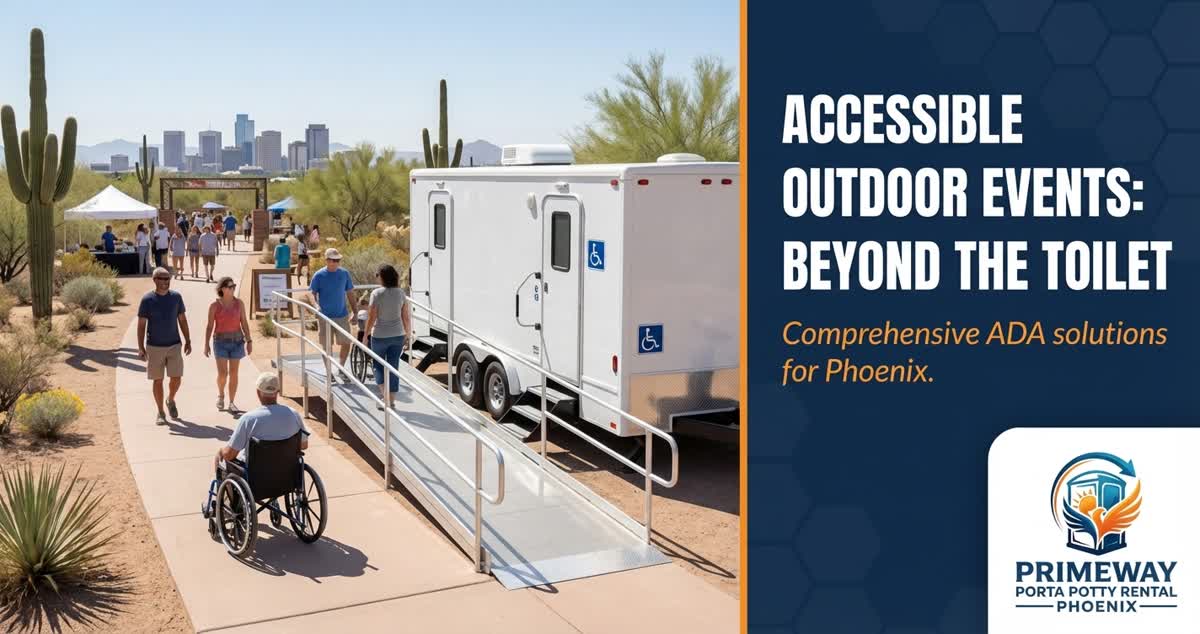
When event planners think about accessibility, ADA porta potties often top the checklist—and rightfully so. Our ADA porta potty requirements guide covers the specific regulations you need to know. But true accessibility at outdoor events extends far beyond restroom facilities. From the moment guests arrive until they leave, every touchpoint either welcomes or excludes people with disabilities. As Phoenix's outdoor event season heats up, understanding comprehensive accessibility planning isn't just compliance—it's good business and inclusive hospitality.
Rethinking Accessibility: A Holistic Approach
Accessibility encompasses more than wheelchair ramps and grab bars. The ADA recognizes three main categories of disability:
- Mobility disabilities: Wheelchair users, walkers, canes, limited stamina
- Sensory disabilities: Blind, low vision, deaf, hard of hearing
- Cognitive and neurological disabilities: Autism, PTSD, traumatic brain injuries, anxiety disorders
An outdoor wedding in Scottsdale or a music festival in downtown Phoenix serves guests across all these categories. Comprehensive accessibility planning addresses each need type while creating spaces that work better for everyone.
"The curb cuts we install for wheelchair users also help parents with strollers, travelers with rolling luggage, and delivery workers with carts. Accessibility improvements create universal benefits."
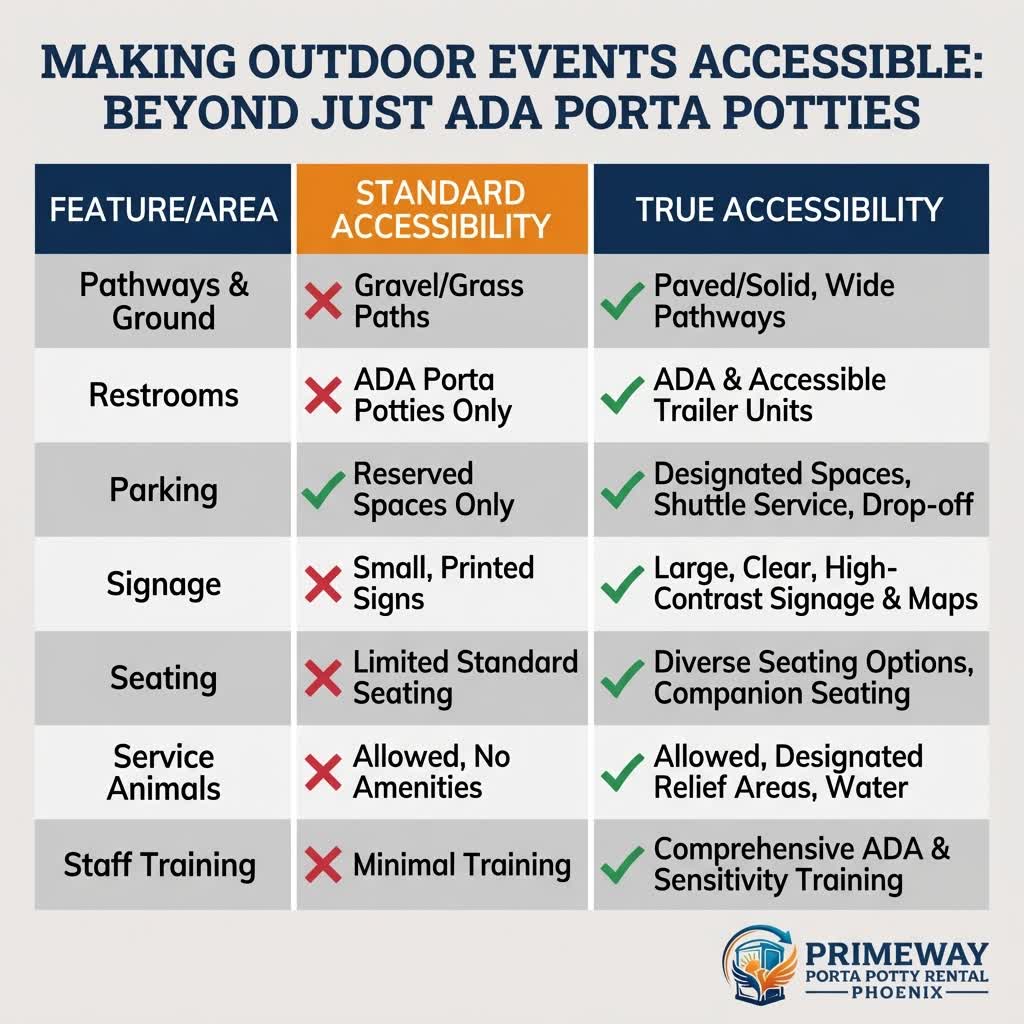
Accessible Pathways and Circulation
Getting to your ADA porta potties matters as much as the units themselves. But pathway accessibility extends throughout your entire event space.
Surface Requirements
ADA standards specify that accessible routes must have surfaces that are:
- Firm (not soft sand or loose gravel)
- Stable (not shifting or rolling)
- Slip-resistant (critical during Phoenix's monsoon season)
- At least 36 inches wide (48 inches preferred)
For outdoor events in Arizona, this creates unique challenges. Desert venues often have natural terrain that doesn't meet these standards. Solutions include:
| Terrain Type | Accessibility Solution | Cost Consideration |
|---|---|---|
| Soft sand/dirt | Composite matting or event decking | $2-5 per sq ft rental |
| Gravel | Compacted decomposed granite pathway | One-time preparation |
| Uneven grass | Plywood pathways with secure edging | Low cost, labor intensive |
| Steep grades | Ramp installation with landings | Moderate to high cost |
Pathway Planning
Effective pathway design includes:
- Direct routes between major areas (parking, seating, vendors, restrooms)
- Rest areas with seating every 200 feet for guests with limited stamina
- Clear signage with Braille and high-contrast text
- Protection from hazards like guy wires, stakes, and equipment
- Staff monitoring to prevent blocking by vendors or guests
At large Phoenix festivals, we've seen accessibility fail because the shortest route to food vendors crossed soft turf, forcing wheelchair users on 400-yard detours. Planning accessible routes from the start prevents these issues.
Parking and Arrival Accessibility
The accessibility experience begins when guests arrive. For outdoor events in Arizona, parking often presents the first challenge.
Accessible Parking Requirements
Federal standards require:
- 1 accessible space per 25 standard spaces (for lots with 1-100 spaces)
- 1 van-accessible space per 6 accessible spaces (or fraction thereof)
- 8-foot access aisles adjacent to spaces
- Signage with the international symbol of accessibility
- Shortest accessible route to event entrance
Van-accessible spaces are particularly important—they provide the extra width needed for wheelchair users who exit from the side rather than the rear of vehicles.
Drop-Off Zones
For events where parking is distant from the venue:
- Designate accessible drop-off zones near entrances
- Provide shuttle service with wheelchair-accessible vehicles
- Train shuttle drivers on wheelchair securement and passenger assistance
- Post clear instructions for requesting accessible transportation
Phoenix summer heat makes accessible drop-off essential. Guests with mobility impairments cannot wait 20 minutes for shuttles in 110°F temperatures.
Seating and Viewing Areas
Once guests arrive, they need places to enjoy your event.
Wheelchair Seating Areas
ADA requires that wheelchair seating spaces:
- Be dispersed throughout seating areas (not segregated in one section)
- Have companion seating adjacent (at least one companion per wheelchair space)
- Provide lines of sight comparable to standard seating
- Be at least 33 inches wide and 48 inches deep
For outdoor concerts and performances in Phoenix, this often means:
- Elevated platforms in flat field venues
- Reserved front-row sections for lip reading access
- Spaces at the back for guests who need quick exit access
- Multiple locations throughout general admission areas
Alternative Seating Options
Beyond wheelchair spaces, consider guests who:
- Use walkers or canes (need aisle seating with grab bars)
- Have service animals (need adequate floor space)
- Cannot stand for long periods (need reserved seated areas)
- Have sensory sensitivities (need quieter, less crowded sections)
Communication Access
For guests who are deaf or hard of hearing, outdoor events present specific challenges.
American Sign Language (ASL) Interpretation
For events with programming (speakers, performances, ceremonies):
- Provide certified ASL interpreters
- Position interpreters in well-lit areas visible to deaf guests
- Include interpreter contact in pre-event communications
- Book interpreters 2-4 weeks in advance (Phoenix has limited supply)
Captioning Services
Real-time captioning (CART) benefits:
- Deaf guests who don't use ASL
- Hard-of-hearing guests
- Guests with auditory processing disorders
- Non-native English speakers
Display captions on screens visible throughout the venue or provide access via smartphone apps.
Assistive Listening Systems
For amplified events, assistive listening systems (ALS) transmit sound directly to hearing aids or receivers. Systems include:
- FM systems (radio transmission)
- Infrared systems (line-of-sight transmission)
- Inductive loop systems (works with hearing aid telecoils)
- Smartphone apps with venue audio streaming
Venues with fixed seating for 50+ people must provide ALS under ADA standards.
Planning an Accessible Outdoor Event in Phoenix?
We help event planners create inclusive experiences with ADA compliant restrooms and accessibility guidance. Call for a consultation.
Call (602) 669-0858Sensory-Friendly Event Design
An estimated 1 in 6 people have sensory processing differences, including many with autism, PTSD, and anxiety disorders. Outdoor events can be overwhelming with their crowds, noise, and unpredictability.
Quiet Spaces
Designate low-sensory areas where guests can decompress:
- Separate from main event activity
- Reduced lighting and sound levels
- Comfortable seating
- Clear signage indicating purpose
- Staff trained to respect space boundaries
For Phoenix summer events, ensure these spaces have shade and cooling, as heat adds to sensory stress.
Predictable Environments
Reduce anxiety through:
- Clear event maps provided in advance
- Visual schedules for multi-part events
- Designated "chill out" zones marked on maps
- Advance notice of loud noises (fireworks, cannons, pyrotechnics)
- Sensory-friendly event hours with reduced stimulation
Visual Accessibility
For guests with low vision:
- High-contrast signage with large print
- Braille on permanent signs and key temporary signs
- Tactile maps at information booths
- Well-lit pathways and activity areas
- Staff available for wayfinding assistance
Service Animal Accommodations
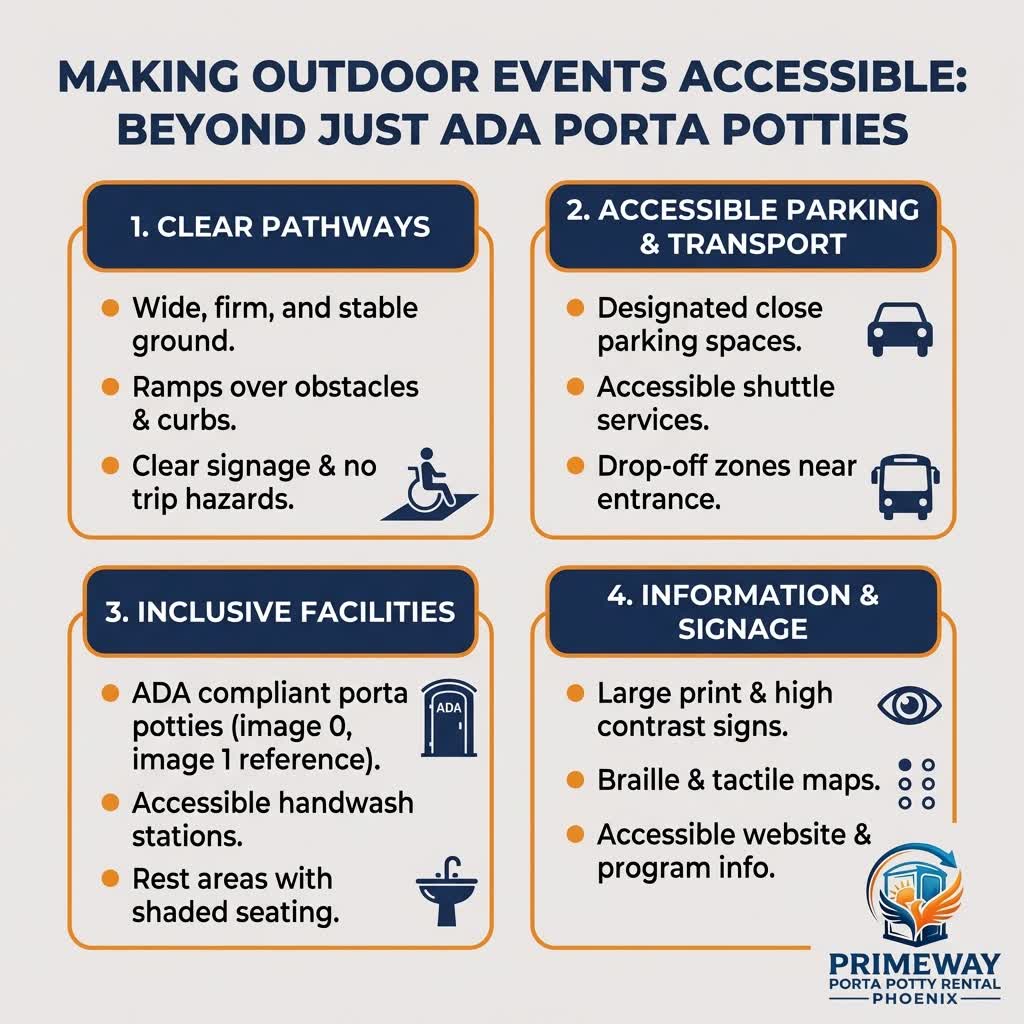
Service animals are not pets—they're medical equipment. Outdoor events must accommodate them.
Service Animal Requirements
- Access to all areas open to the public
- Relief areas with appropriate surface (not just grass)
- Water stations throughout the venue
- Shade in Phoenix heat
- Waste disposal stations and bags
Service animal relief areas should be separate from general guest areas and clearly marked.
Staff Training
Event staff should understand:
- Only two questions are permissible: "Is this a service animal?" and "What work or task has it been trained to perform?"
- No documentation or special tags are required under federal law
- Service animals can be any breed or size
- Handlers cannot be charged extra fees or deposits
Food and Beverage Accessibility
Food service at outdoor events requires its own accessibility considerations.
Vendor Booth Accessibility
- 34-inch minimum counter height for wheelchair users
- Clear floor space (30" × 48") at service counters
- Payment terminals within reach ranges
- Menus available in large print and Braille
- Staff trained to assist guests with disabilities
Dietary Accommodations
Some disabilities affect diet:
- Provide allergen information clearly
- Offer texture-modified options for guests with swallowing difficulties
- Label food with common allergens (nuts, dairy, gluten)
- Have staff available to read menus for blind guests
Staff Training and Disability Etiquette
The most accessible physical space fails without knowledgeable staff. Training should cover:
Disability Etiquette Basics
- Speak directly to the person with a disability, not their companion
- Ask before assisting—don't assume help is needed
- Respect personal space and mobility equipment
- Use person-first language unless otherwise requested
- Be patient and clear in communication
Specific Situations
- Guiding blind guests: offer your elbow, don't grab
- Communicating with deaf guests: face them, speak clearly, write if needed
- Wheelchair users: don't touch or lean on wheelchairs
- Service animals: ignore them completely—they're working
- Hidden disabilities: believe guests who request accommodations
Emergency Procedures
Staff must know evacuation procedures for guests with disabilities:
- Areas of rescue assistance for multi-level venues
- Communication methods for guests who cannot hear alarms
- Evacuation chair locations and operation
- Buddy system for guests needing assistance
Marketing and Communication
Accessibility begins before the event—guests need information to plan their visit.
Accessible Marketing Materials
- Websites meeting WCAG 2.1 AA standards
- Alternative text on all images
- Captions on promotional videos
- Large print materials available upon request
- Email and phone contact for accommodation requests
Pre-Event Information
Communicate clearly about:
- Terrain type and footwear recommendations
- Distance from parking to event entrance
- Availability of wheelchairs for loan
- Quiet hours or sensory-friendly times
- ASL interpretation and captioning schedules
- Service animal relief area locations
Arizona-Specific Accessibility Considerations
Phoenix-area outdoor events face unique challenges and opportunities.
Climate Accommodations
Extreme heat affects guests with certain disabilities more severely:
- Provide additional shade structures in accessible seating areas
- Ensure misters or cooling stations are wheelchair accessible
- Make water stations usable from seated height
- Consider earlier start times to avoid peak heat
- Train staff to recognize heat-related illness in guests who cannot communicate symptoms
Dust and Air Quality
Phoenix dust storms affect guests with respiratory conditions:
- Provide enclosed, filtered-air spaces for guests with asthma or COPD
- Monitor air quality alerts and communicate changes
- Have medical stations equipped for respiratory distress
Budgeting for Accessibility
Comprehensive accessibility requires investment, but costs can be managed strategically:
| Accessibility Feature | Estimated Cost | Priority Level |
|---|---|---|
| ADA porta potties (5% of units) | +30-50% per unit | Required by law |
| Accessible pathway matting | $2-5/sq ft | High |
| ASL interpreters | $50-100/hour | Medium |
| Assistive listening system | $500-2,000 | Medium |
| Quiet space setup | $200-500 | Medium |
| Staff training | $500-1,000 | High |
| Accessible parking signage | $100-300 | Required |
Many accessibility features (like pathway stability) improve the experience for all guests. Others qualify for tax deductions as business expenses or ADA compliance costs.
Working with Accessibility Consultants
For large Phoenix events, consider hiring a certified access consultant (CASp in California, similar credentials in Arizona). They can:
- Review site plans before construction
- Identify accessibility barriers before they become expensive problems
- Provide documentation for permit applications
- Train staff on disability awareness
- Conduct post-event accessibility audits
The cost of consultation ($1,000-5,000 for large events) is far less than retrofitting inaccessible elements or defending discrimination complaints.
Making outdoor events truly accessible requires looking beyond ADA porta potties to consider the entire guest journey. From arrival through departure, every interaction either welcomes or excludes. By planning for mobility, sensory, and cognitive accessibility needs, Phoenix event planners create experiences that serve their entire community while often improving the event for all attendees. Contact Primeway Porta Potty Rental Phoenix to discuss accessibility for your next outdoor event.