Key Takeaways
- Service porta potties every 4-6 hours during high-traffic festival days
- Pair units with portable hand wash stations to reduce cross-contamination
- Position cleaning stations strategically throughout the festival grounds
- Train dedicated staff on proper sanitization protocols between uses
- Stock units with double supplies to prevent mid-day shortages
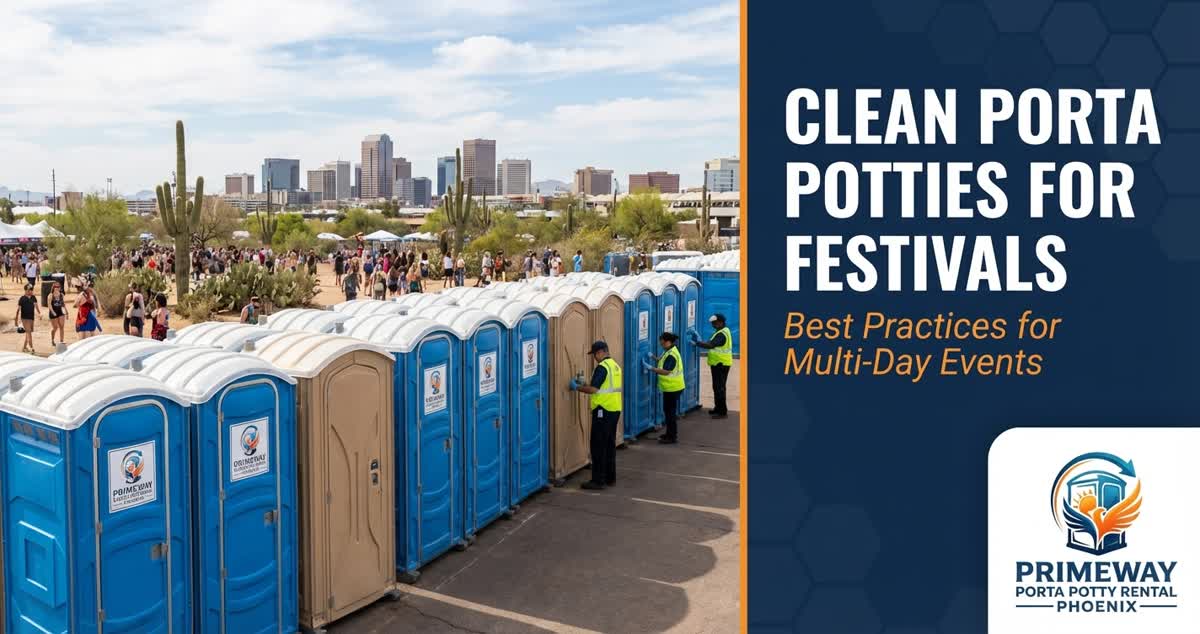
Multi-day festivals present one of the greatest challenges in portable sanitation management. Whether you're organizing a three-day music festival at Salt River Fields, a weekend arts fair in downtown Phoenix, or a multi-day cultural celebration, keeping porta potties clean throughout the event directly impacts attendee satisfaction and public health.
At Primeway Porta Potty Rental Phoenix, we've serviced some of the largest outdoor events in Arizona. This guide shares proven strategies for maintaining clean, sanitary restroom facilities from day one through the final encore.
Why Multi-Day Festival Sanitation Requires Special Planning
Unlike single-day events, multi-day festivals compound sanitation challenges. Attendees return to the same facilities repeatedly. Waste accumulates continuously. Supplies deplete faster than anticipated. And Phoenix's desert climate creates unique complications—extreme heat accelerates odor development and bacterial growth, while sudden dust storms can introduce debris into units.
The stakes are high. Poor restroom conditions generate more attendee complaints than almost any other festival element. Social media spreads negative experiences instantly. Health department violations can shut down events. Conversely, clean facilities contribute to longer stays, higher vendor sales, and positive word-of-mouth that drives next year's ticket sales.
Pre-Event: Setting Up for Success
Calculate the Right Unit Count
Multi-day festivals require more units per attendee than single-day events. Why? Because fatigue and accumulated waste create faster deterioration. As a baseline, plan for one unit per 50-75 attendees for festivals lasting 2-3 days. For 4+ day events, increase to one unit per 40-60 attendees.
Consider these additional factors:
- Alcohol consumption at music festivals increases restroom usage by 30-40%
- Food vendor density correlates directly with sanitation demand
- Peak hours (headliner performances, meal times) create usage spikes
- Camping components require morning rush capacity planning
Strategic Unit Placement
Position units in clusters rather than isolated locations. Cleaning crews can service multiple units efficiently, and attendees always have backup options if one unit requires emergency maintenance. Place clusters:
- Near main stage areas (but not so close that noise or smell disrupts performances)
- Adjacent to food courts and beer gardens
- At camping zone entrances for morning convenience
- Near transportation hubs and parking areas
- Along main thoroughfares at 200-foot intervals
Include Hand Washing Infrastructure
Hand hygiene dramatically impacts overall cleanliness perception. Portable hand wash stations should outnumber porta potty units by at least 1:4. Position them immediately adjacent to restroom clusters, not across the venue where attendees skip hand washing.
For food festivals and events with high hygiene requirements, consider adding hand sanitizer dispensers on unit exteriors as supplementary protection.
Service Schedules: The Key to Multi-Day Maintenance
Daily Deep Cleaning
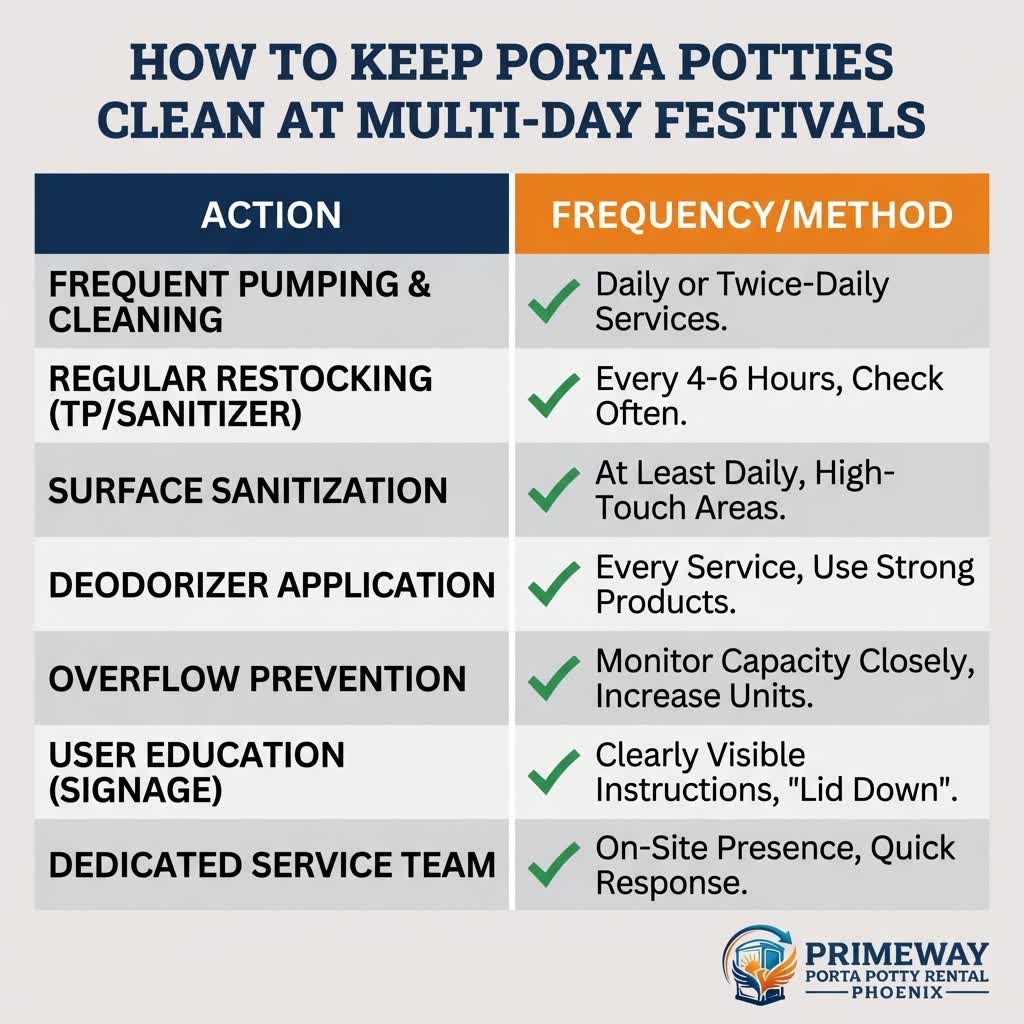
Every porta potty at a multi-day festival requires comprehensive servicing at least once daily—preferably during early morning hours when attendance is lowest. Deep cleaning includes:
- Complete waste tank evacuation and replenishment of blue sanitizing solution
- Interior surface disinfection using EPA-registered cleaning agents
- Restocking of toilet paper, seat covers, and hand sanitizer
- Floor scrubbing and deodorizer application
- Exterior power washing to remove dust and debris
Continuous Maintenance Shifts
Beyond daily deep cleaning, assign dedicated attendants to high-traffic units during peak hours. These staff members should:
| Time Block | Service Frequency | Key Tasks |
|---|---|---|
| 6:00 AM - 10:00 AM | Every 2 hours | Restock supplies, quick wipe-down, check waste levels |
| 10:00 AM - 6:00 PM | Every 3-4 hours | Full service including waste pumping if needed |
| 6:00 PM - 12:00 AM | Every 2 hours | High-intensity service during peak attendance |
| 12:00 AM - 6:00 AM | Every 4 hours | Minimal service unless camping area has overnight activity |
Emergency Response Protocols
Establish clear procedures for unit failures. Block malfunctioning units immediately with visible signage. Have backup units staged and ready for rapid deployment. Maintain radio communication between cleaning crews and festival operations to coordinate quick responses.
Staff Training and Management
Sanitation Crew Composition
Effective festival sanitation requires specialized roles:
- Service Technicians: Licensed waste handling operators with vacuum truck access
- Unit Attendants: On-foot staff monitoring high-traffic clusters throughout the day
- Supply Runners: Dedicated personnel for continuous toilet paper, sanitizer, and deodorizer delivery
- Quality Inspectors: Supervisors conducting random unit checks with documentation
Health and Safety Training
All sanitation staff must complete bloodborne pathogen training and understand proper PPE use. Phoenix summer temperatures exceeding 110°F create heat illness risks—provide cooling stations, mandatory hydration breaks, and rotational schedules for outdoor workers.
Communication Systems
Equip all staff with two-way radios or festival communication apps. Create simple status codes for common issues: "Unit 12 needs service," "Out of paper at Cluster C," or "Emergency pump needed at Stage 3." Fast communication prevents small problems from becoming attendee complaints.
Planning a Multi-Day Festival in Phoenix?
Get expert sanitation planning, on-site service crews, and 24/7 emergency support.
Call (602) 669-0858Supply Management for Extended Events
Over-Stocking Strategy
Running out of toilet paper at a festival creates immediate negative experiences—and viral social media posts. Calculate expected usage and double it. For a three-day festival with 5,000 daily attendees, plan for:
- 15,000+ rolls of toilet paper (triple-ply preferred to reduce consumption)
- 500+ gallons of hand sanitizer
- 200+ gallons of blue deodorizing solution
- 50+ cases of seat covers
- Spare toilet seats and hardware for emergency repairs
Weather-Resistant Storage
Phoenix's intense sun degrades paper products and evaporates liquid supplies. Store backup inventory in climate-controlled trailers or shaded structures. Lock supplies overnight to prevent theft. Create visible inventory tracking boards so staff can quickly assess remaining stock levels.
Attendee Communication and Behavior
Signage That Educates
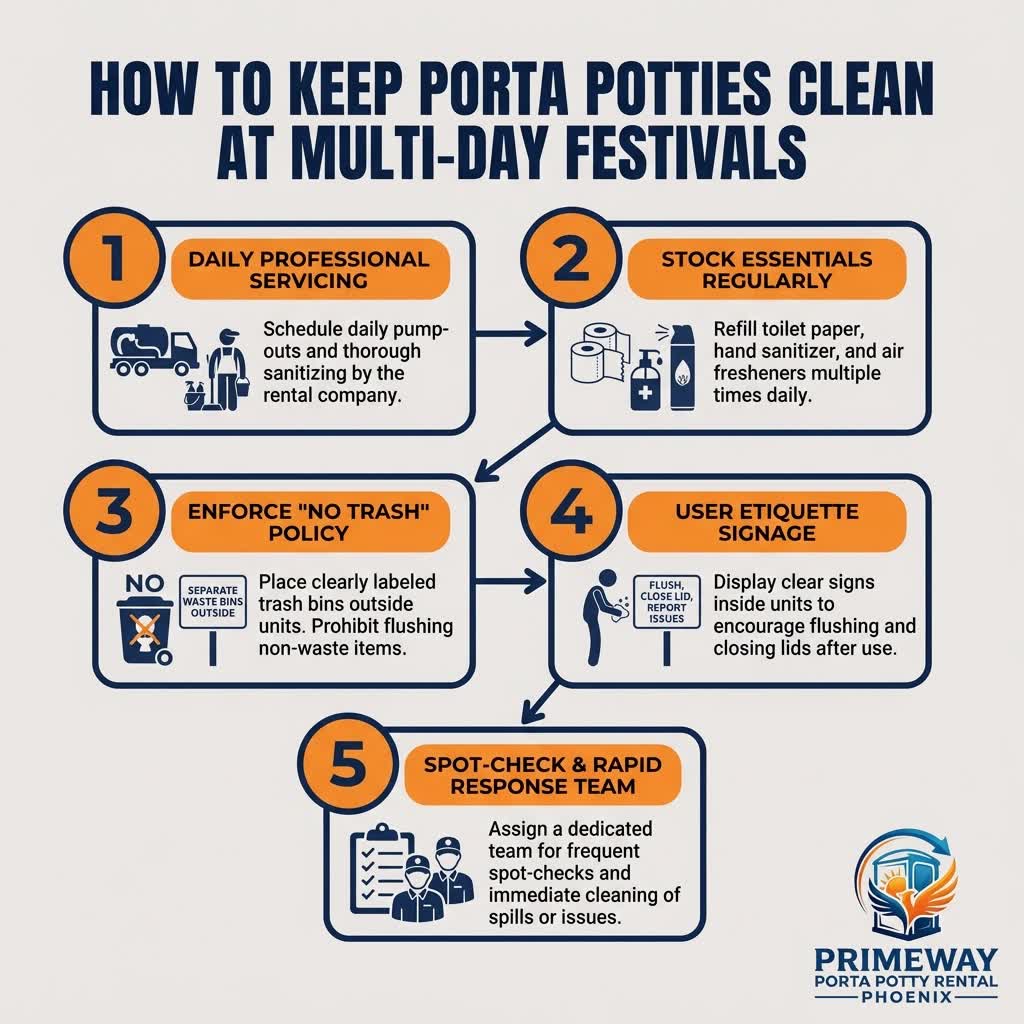
Clear signage reduces misuse and extends cleanliness. Post instructions on:
- Proper toilet paper disposal (never in trash cans, always in bowl)
- Hand washing protocols
- Reporting problems to festival staff
- Recycling stations for festival materials (keeping trash out of units)
VIP and General Admission Separation
If your festival offers tiered ticketing, maintain separate restroom facilities for VIP areas. This protects premium attendees from general admission wear while reducing overall usage pressure on standard units. Consider luxury restroom trailers for backstage and VIP zones where budget allows.
Special Considerations for Phoenix Festivals
Heat Management
Arizona summer festivals face unique challenges. Dark-colored porta potty interiors can exceed 140°F internally. Consider:
- Positioning units to maximize shade coverage
- Using reflective roof treatments or shade sails above clusters
- Scheduling more frequent deodorizer application (heat accelerates odor)
- Providing cooling towels for sanitation staff
Dust Storm Preparedness
Monsoon season dust storms can render units unusable in minutes. Keep units closed when not actively serviced. Have compressed air systems available for rapid interior cleaning after dust events. Consider weather-resistant deluxe units with better sealing for premium areas.
Water Conservation
Traditional hand washing consumes significant water over multi-day events. Portable hand wash stations with foot pumps reduce water waste while maintaining hygiene standards—critical in drought-conscious Arizona.
Post-Event Evaluation
Document everything. Track which units required most frequent service, where supply depletion occurred fastest, and which placement strategies worked best. Survey attendees about restroom satisfaction. This data informs next year's planning and demonstrates due diligence to health inspectors and insurance providers.
Multi-day festival sanitation isn't just about renting enough units—it's about creating systems that maintain cleanliness continuously across changing conditions. With proper planning, trained staff, and responsive service, your festival facilities can remain clean and pleasant from the opening act to the final farewell.
For professional festival porta potty rental with on-site service crews in the Phoenix area, contact our team. We've supported events ranging from local community festivals to major multi-day concerts, and we bring that experience to every client's sanitation planning.