
Key Takeaways
- Delivery fees, fuel surcharges, and distance charges can add 15-30% to your base rental cost
- Damage waivers protect you but aren't always necessary—understand what they cover
- Weekend, holiday, and emergency deliveries almost always incur premium charges
- Service frequency upgrades and late returns can create unexpected costs
- Always request an itemized quote that clearly shows all potential charges
Nobody likes surprises on their bill—especially when you're trying to stick to a project budget. Yet in the portable sanitation industry, unexpected fees can turn an affordable rental into an expensive headache if you don't know what to look for.
At Primeway Porta Potty Rental Phoenix, we believe in transparent, upfront pricing. But not all providers operate the same way. This guide exposes the most common hidden fees in the porta potty rental industry and shows you how to avoid them, ensuring you get the service you need at a price you can predict.
Transportation and Delivery Fees
Transportation-related charges represent one of the most common sources of billing surprises. Here's what to watch for:
Base Delivery Charges
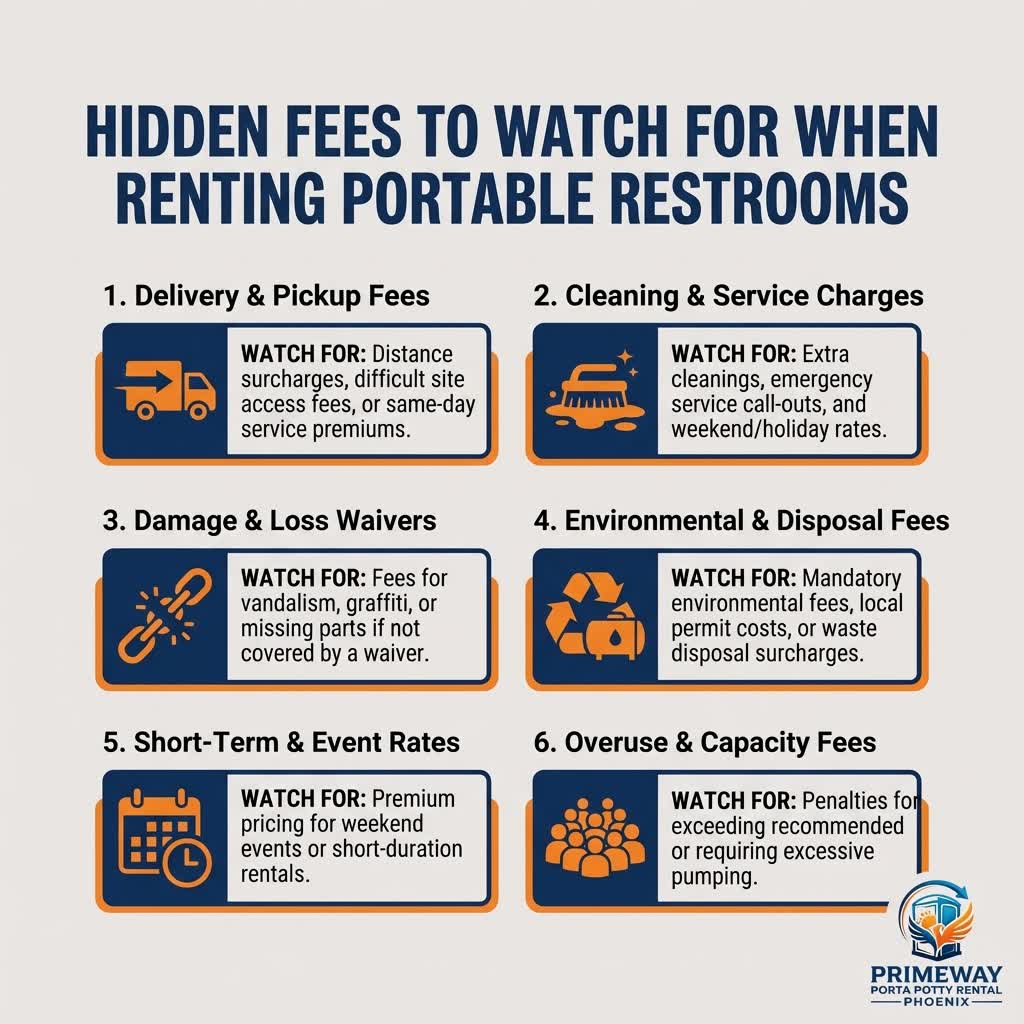
Some companies advertise attractive daily rental rates but add substantial delivery fees that aren't prominently disclosed. A $75 per week unit might sound like a deal until you discover the $150 delivery charge—more than doubling your first week's cost.
How to avoid it: Always ask if delivery and pickup are included in the quoted rate. Get the specific dollar amount for both delivery and pickup in writing before signing any agreement.
Distance and Out-of-Area Surcharges
Rental companies typically define a service area and charge extra for deliveries outside that zone. In the Phoenix area, providers usually cover the Valley core (Phoenix, Scottsdale, Tempe, Mesa, Chandler, Glendale) without extra fees. However, sites in Casa Grande, Prescott, Flagstaff, or remote desert locations often trigger distance surcharges.
These charges vary widely—anywhere from $25 to $150 extra per delivery depending on distance and fuel costs. Learn more about how delivery distance affects your porta potty rental cost.
How to avoid it: Confirm your site's location is within the provider's standard service area before requesting a quote. If you're outside the standard zone, get the specific surcharge amount upfront.
Fuel Surcharges
Many rental agreements include clauses allowing fuel surcharges when diesel prices exceed certain thresholds. While these clauses protect providers from volatile fuel costs, they can surprise customers when fuel prices spike.
How to avoid it: Ask whether fuel surcharges apply and under what conditions. Some providers offer fixed-rate agreements that don't fluctuate with fuel prices—often worth the slight premium for budget predictability.
Difficult Access Fees
If your site requires special handling—carrying units up stairs, across soft sand, through narrow passages, or over walls—expect additional charges. These "difficult access" or "special placement" fees compensate for extra time and labor required.
How to avoid it: Describe your site conditions accurately when requesting a quote. Provide photos of the placement area if access is challenging. Planning your porta potty placement layout ahead of time helps avoid difficult access fees and ensures the provider can quote accurately rather than adding surprise charges on delivery day.
Timing and Scheduling Surcharges
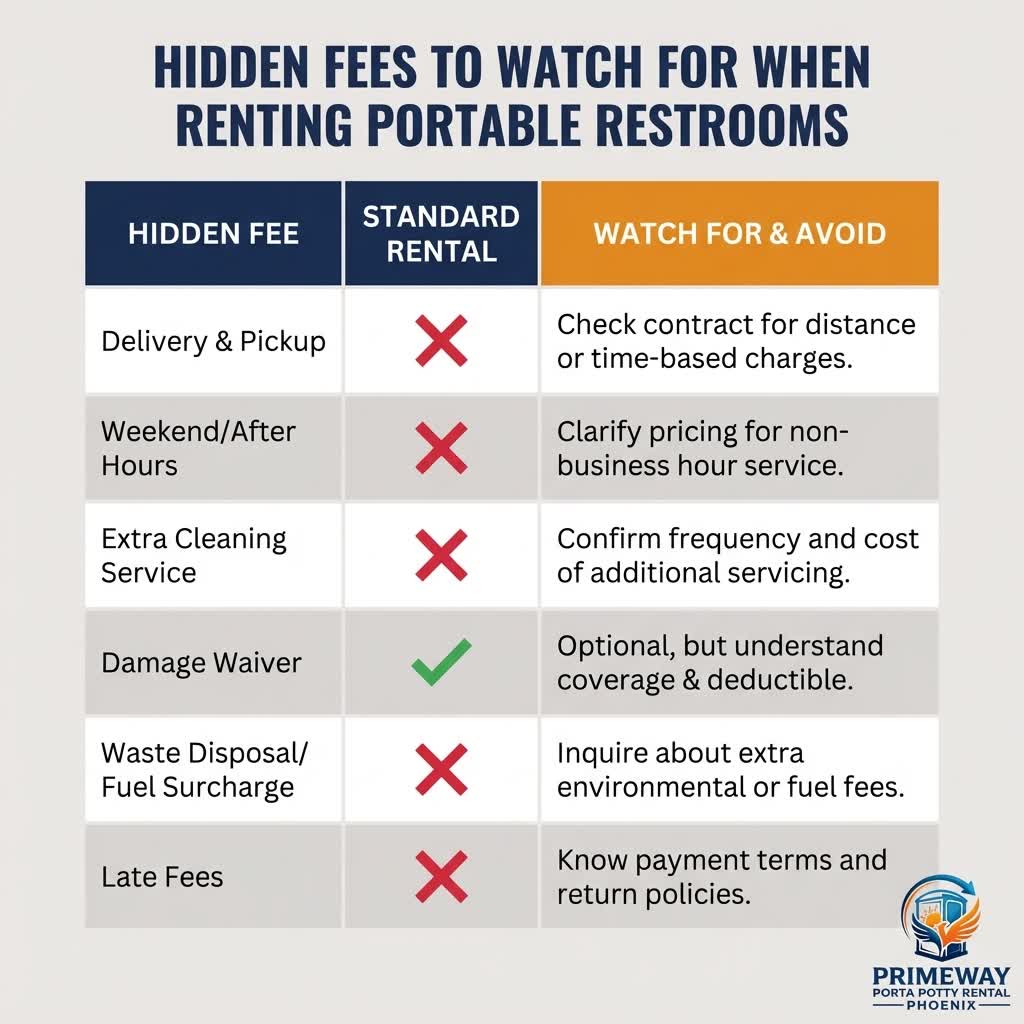
When you need your porta potty can affect pricing as much as where you need it.
Weekend Delivery and Pickup
Most rental companies operate Monday through Friday for standard deliveries and pickups. If you need service on Saturday or Sunday, expect to pay premium rates—often 25-50% above standard pricing.
This particularly affects event planners who need units delivered Friday for Saturday events and picked up Monday. Some providers structure their weekly rates specifically to accommodate this pattern, while others charge weekend premiums.
How to avoid it:> Plan your delivery for Thursday or Friday morning if possible, and schedule pickup for Tuesday, avoiding weekend service entirely. If weekend service is unavoidable, get the specific surcharge in writing.
Holiday Rates
Major holidays—Thanksgiving, Christmas, New Year's, Memorial Day, July 4th, and Labor Day—often trigger holiday rates. Some providers don't operate at all on these days, while others charge double or triple time for any services.
If your event spans a holiday weekend or your construction project requires service on a holiday, understand these charges before committing.
How to avoid it: Ask specifically about holiday scheduling and rates. Plan around holidays when possible, or budget for the additional charges if they're unavoidable.
Emergency and Rush Deliveries
Need a porta potty tomorrow for an event you just found out about? Expect to pay emergency or rush delivery fees. These charges compensate for disrupting scheduled routes and working outside normal hours.
Emergency fees typically range from $50 to $200 depending on urgency and distance. Same-day service almost always triggers these charges, while next-day service might avoid them if the provider has availability.
How to avoid it: Plan ahead. For events, book at least two weeks in advance when possible. For construction, arrange sanitation before the project starts rather than scrambling after workers arrive.
After-Hours Service
Standard delivery windows typically fall within business hours (8 AM to 5 PM). If you need early morning delivery before an event or service outside normal hours, after-hours fees may apply.
How to avoid it: Be flexible with delivery timing when possible. If you need specific timing, ask about after-hours charges upfront.
Service and Maintenance Fees
Ongoing service represents another area where fees can accumulate unexpectedly.
Standard vs. Premium Service Levels
Basic rental agreements typically include weekly servicing for long-term rentals. This usually covers waste removal, tank cleaning, and restocking toilet paper and hand sanitizer. However, high-traffic sites may need more frequent service, which comes at additional cost.
Some providers offer tiered service levels—basic, standard, and premium—with different frequencies and thoroughness of cleaning. Make sure you understand exactly what your agreement includes and what triggers additional service charges.
How to avoid it: Clarify service frequency and what's included. For high-traffic events, consider upgrading service upfront rather than paying emergency cleaning fees later.
Emergency Cleaning
If your unit becomes unsanitary between scheduled services—whether from overuse, vandalism, or extreme weather—you may need emergency cleaning. This unscheduled service typically costs significantly more than routine maintenance.
How to avoid it: Order adequate units for your expected usage. One unit for 100 people at an all-day festival with alcohol is asking for trouble. Follow industry guidelines: one unit per 50 guests for four-hour events, increasing for longer durations and alcohol service.
Damage and Cleaning Charges
When you return a rental unit in poor condition, cleaning and damage fees apply. While reasonable wear and tear is expected, excessive filth, graffiti, physical damage, or missing components trigger charges.
Common damage charges include:
- Graffiti removal: $50-150 per incident
- Deep cleaning (beyond normal service): $75-200
- Replacement of damaged parts: $25-500 depending on component
- Missing unit (theft or unrecoverable): Full replacement cost
How to avoid it: Supervise units during events, especially in public areas. For construction sites, position units where they're visible and secure. Consider damage waivers for high-risk situations.
Damage Waivers and Insurance
Damage waivers represent a fee category worth understanding in detail.
What Damage Waivers Cover
Damage waivers are optional add-ons that limit your financial liability if a unit is damaged during your rental. They typically cover:
- Accidental damage from normal use
- Weather-related damage (wind, flooding)
- Vandalism (in some policies)
- Theft of the unit (in comprehensive waivers)
The waiver essentially transfers repair and replacement costs from you to the rental company, subject to certain limitations and deductibles.
Cost vs. Benefit Analysis
Damage waivers typically add 10-15% to your base rental cost. For a $100 weekly rental, that's $10-15 per week. Over a three-month construction project, that adds up to $120-180 in waiver fees.
Whether this is worth it depends on your situation:
Likely worth it:
- Public events with unrestricted access
- Sites in high-traffic or high-vandalism areas
- Long-term rentals where risk accumulates over time
- Locations prone to extreme weather or flooding
Probably skip it:
- Private events with controlled guest lists
- Secure construction sites with limited public access
- Short-term rentals (1-3 days) with minimal risk exposure
- Situations where your existing insurance may already cover rental equipment
How to decide: Ask exactly what the waiver covers and what it excludes. Compare the waiver cost against potential damage charges. Check whether your business insurance or event insurance already covers rental equipment.
Get a Transparent, All-Inclusive Quote
At Primeway, our quotes include everything—no surprises. Call us for honest pricing.
Call (602) 669-0858Administrative and Miscellaneous Fees
Beyond the major categories above, watch for these additional charges:
Setup and Tear-Down Fees
Some providers separate "delivery" from "setup" and charge separately for positioning the unit, securing it, and connecting any accessories. Similarly, "pickup" might not include the labor to disconnect and prepare the unit for transport.
How to avoid it: Ask specifically whether setup and preparation for pickup are included in delivery and pickup charges, or if they're separate line items.
Paperwork and Environmental Fees
Environmental compliance fees, waste disposal surcharges, and administrative processing fees appear on some invoices. These may be legitimate costs of doing business, but they should be disclosed upfront.
ADA compliance is another area where costs can vary — learn more about how many ADA portable restrooms your event needs so you can budget accurately.
How to avoid it: Request an itemized quote showing all fees, not just the base rental rate.
Late Return Fees
If your project runs long and you need the unit beyond the agreed rental period, late return fees may apply. These can be daily charges at premium rates or flat extension fees.
How to avoid it: Communicate timeline changes as early as possible. Most providers will work with you on extensions if you give them notice, rather than charging punitive late fees.
Cancellation Fees
Plans change. If you need to cancel a reservation, understand the cancellation policy. Some providers charge full price for cancellations within 48 hours, while others offer full refunds with sufficient notice.
How to avoid it: Review cancellation terms before booking. Understand that last-minute cancellations often leave providers with unrentable inventory, justifying their fees—but you should know the policy upfront.
Credit Card Processing Fees
While less common than in the past, some providers still add surcharges for credit card payments. ACH transfers or checks may avoid these fees.
How to avoid it: Ask about payment methods and any associated fees. Factor processing costs into your total if paying by card.
Reading the Fine Print: Contract Red Flags
Protect yourself by carefully reviewing rental agreements before signing. Watch for these warning signs:
Vague Language About Additional Charges
Contracts stating that "additional fees may apply" without specifying what, when, or how much leave you vulnerable to surprise charges. Insist on specific fee schedules.
Automatic Renewal Clauses
Some agreements automatically renew weekly or monthly unless you provide advance notice of cancellation. If you forget to call and cancel, you keep paying even after your project ends.
Open-Ended Damage Liability
Contracts making you liable for "any and all damage" without defining normal wear and tear can lead to disputes. Ensure the agreement distinguishes between acceptable use and chargeable damage.
No Price Protection
For long-term rentals, confirm whether your rate is locked for the entire term or subject to increase. Some providers reserve the right to raise rates with minimal notice.
Questions to Ask Before You Rent
Get clear answers to these questions to avoid billing surprises:
- Is delivery included in the quoted rate? If not, what's the specific charge?
- Is pickup included? When will it occur?
- Are there fuel surcharges or distance fees for my location?
- What's included in standard service, and how often does it occur?
- What triggers additional service charges?
- Are there weekend, holiday, or after-hours surcharges?
- What's the cost of the damage waiver, and what exactly does it cover?
- What constitutes damage versus normal wear and tear?
- What's the cancellation policy?
- Are there automatic renewals or extensions I need to be aware of?
- Is my rate locked for the entire rental period?
- Can you provide an itemized quote showing all potential charges?
A reputable provider will answer these questions willingly and provide documentation. Hesitation or vague answers suggest potential problems down the road.
The Primeway Difference: Transparent Pricing
At Primeway Porta Potty Rental Phoenix, we've built our business on honest, transparent pricing. When you receive a quote from us, it includes:
- Delivery and pickup within our standard service area
- Setup and positioning at your specified location
- Scheduled servicing appropriate for your rental duration
- Toilet paper, hand sanitizer, and deodorizer
- All taxes and environmental fees
If distance surcharges, weekend premiums, or damage waivers apply, we tell you before you commit—not when the invoice arrives. Our commitment to transparency reflects our belief that trust matters more than a quick sale.
We encourage you to compare quotes from multiple providers. When you do, make sure you're comparing total cost, not just the attractive base rate advertised. The true cost of a rental includes every fee you'll pay over the entire rental period.
Conclusion: Knowledge Is Your Best Protection
Hidden fees in the porta potty rental industry aren't necessarily scams—they're often legitimate costs of providing service. The problem arises when customers don't know about them until the bill arrives.
By understanding the common fee categories—transportation, timing, service, damage protection, and administration—you can ask the right questions and get accurate quotes. The few minutes you spend clarifying costs upfront can save hundreds of dollars and significant frustration.
Remember that the cheapest quote isn't always the best value. A slightly higher rate from a provider with transparent, all-inclusive pricing often beats a low base rate with layers of added fees.
Ready for a porta potty rental quote with no surprises? Contact Primeway Porta Potty Rental Phoenix today. We'll provide a detailed, itemized quote that shows exactly what you'll pay—no hidden fees, no surprises, just honest service at a fair price.
Related reading: Get the full picture on porta potty rental costs in Arizona and understand how delivery distance impacts your final price.