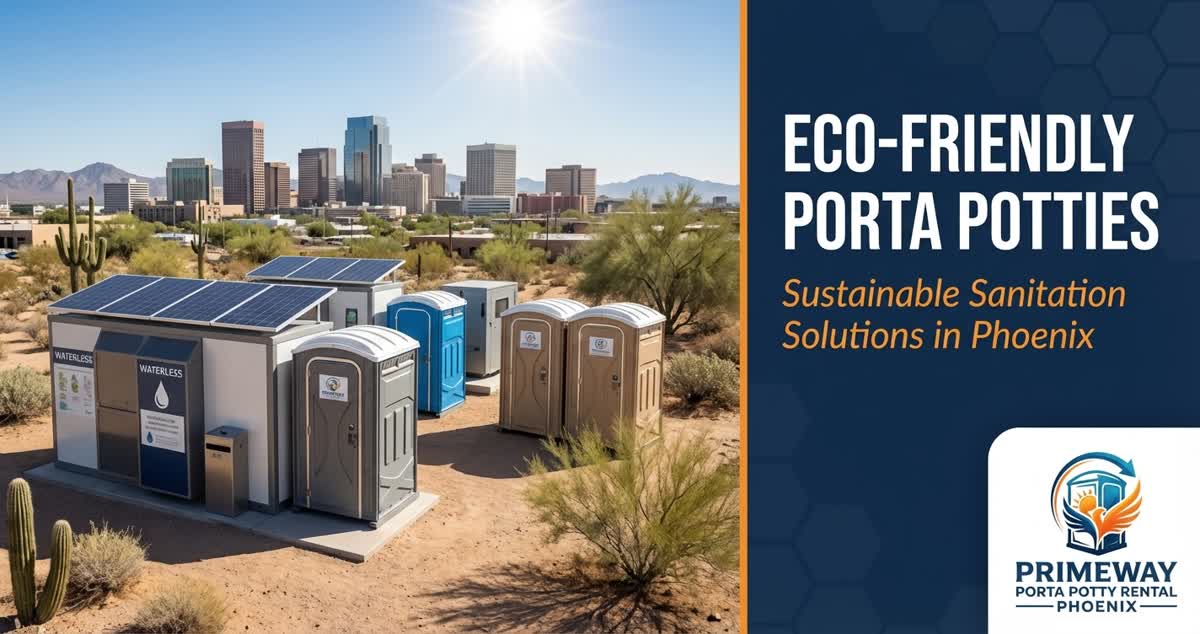
Key Takeaways
- Modern porta potties use up to 90% less water per flush than traditional indoor toilets
- Bio-based, formaldehyde-free chemicals have replaced harsh traditional deodorizers in the industry
- Portable sanitation units are made from recyclable HDPE plastic that lasts 10+ years
- Waste from porta potties is treated at licensed wastewater facilities (the cleaning and servicing schedule determines how efficiently this process works), not dumped in landfills
- Solar-powered lighting and ventilation are becoming standard in newer portable restroom models
When most people think about porta potties, "environmentally friendly" isn't the first phrase that comes to mind. But the portable sanitation industry has undergone a quiet green revolution over the past decade. Modern portable restrooms are engineered to conserve water, use biodegradable chemicals, minimize waste, and reduce carbon footprints — especially compared to the environmental cost of building permanent restroom facilities for temporary needs.
Whether you're an event planner looking for sustainable options, a contractor meeting environmental compliance standards, or simply curious about how the industry works, this guide breaks down the real environmental story behind modern portable sanitation.
The Water Conservation Advantage
Water scarcity is a defining issue in Phoenix and across the American Southwest. The Colorado River continues to face unprecedented drought conditions, and Maricopa County residents are increasingly conscious of water usage. This is where portable restrooms have a surprising environmental advantage.
How Much Water Do Porta Potties Save?
A standard indoor toilet uses 1.6 gallons per flush (older models use up to 3.5 gallons). A non-flushing portable restroom uses zero water per use. Even flushable portable units use a fraction of what indoor plumbing requires — typically 2–4 ounces per flush through recirculating systems.
Let's put this in perspective:
| Restroom Type | Water Per Use | Water for 500 Uses |
|---|---|---|
| Standard indoor toilet | 1.6 gallons | 800 gallons |
| Older indoor toilet | 3.5 gallons | 1,750 gallons |
| Flushable porta potty | ~0.03 gallons | ~15 gallons |
| Standard porta potty | 0 gallons | 0 gallons |
For a large outdoor event with 500 guests, the water savings are substantial. In a region where every gallon matters, this isn't a trivial benefit.
No Infrastructure, No Permanent Water Lines
Building permanent restroom facilities for temporary needs — a weekend festival, a six-month construction project, a seasonal event venue — requires running water lines, installing sewage connections, and constructing buildings. All of that carries a significant environmental footprint in materials, energy, and ongoing water consumption. Portable restrooms eliminate all of it.
The Chemistry: From Formaldehyde to Bio-Based Solutions
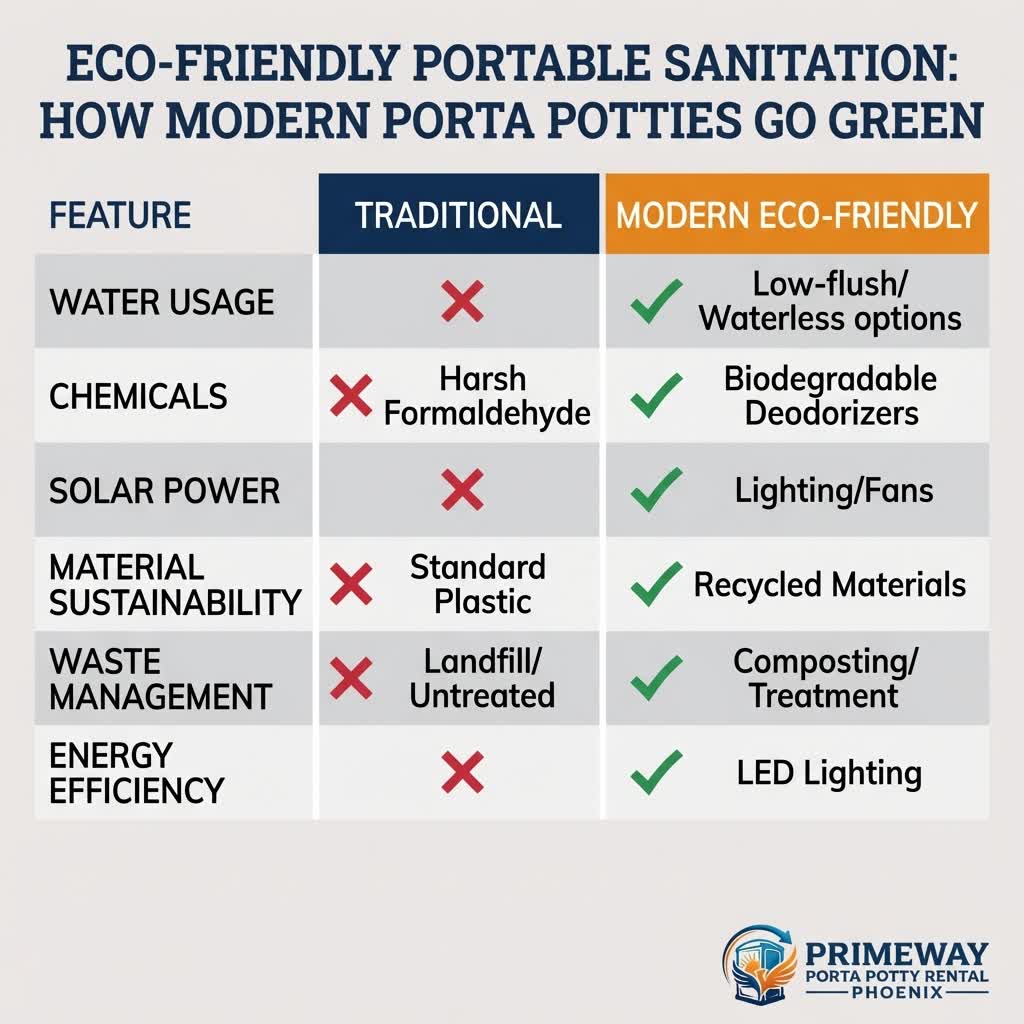
The blue liquid inside a porta potty — technically called a holding tank deodorizer — has a reputation. Historically, the industry relied heavily on formaldehyde-based chemicals to control odor and break down waste. Formaldehyde is effective, but it's also classified as a probable human carcinogen by the EPA and is toxic to aquatic ecosystems.
The good news: the industry has largely moved away from formaldehyde. Here's what's replaced it:
Bio-Based Deodorizers
Modern porta potty chemicals use enzyme-based and bacterial formulations that break down waste biologically rather than chemically. These bio-based solutions are:
- Biodegradable — They break down naturally in wastewater treatment
- Non-toxic — Safe for workers who service the units
- Effective — Modern formulations control odor as well as or better than traditional chemicals
- Aquatic-safe — They don't harm waterways or soil when properly processed
Fragrance-Free and Dye-Free Options
Some providers now offer fragrance-free and dye-free deodorizer options for events where chemical sensitivity is a concern or where environmental certifications require it. These are particularly popular for eco-conscious events, green-certified construction sites, and outdoor gatherings on environmentally sensitive land.
According to the Portable Sanitation Association International (PSAI), over 75% of the portable sanitation industry has transitioned to formaldehyde-free chemicals as of 2025, driven by both regulation and customer demand.
What Happens to the Waste?
One of the most common misconceptions about portable restrooms is that the waste is dumped somewhere unregulated. In reality, porta potty waste goes through a carefully controlled process that's regulated at both the state and federal level.
The Waste Processing Chain
- Collection: Service technicians pump waste from holding tanks into vacuum trucks
- Transport: Waste is transported to licensed wastewater treatment facilities
- Treatment: The waste goes through the same treatment process as residential sewage — primary settling, biological treatment, and disinfection
- Discharge: Treated water is discharged to approved waterways or reused for irrigation and industrial purposes
- Solids processing: Biosolids are processed into fertilizer or disposed of at approved facilities
In Arizona, the Arizona Department of Environmental Quality (ADEQ) regulates waste haulers and treatment facilities. All portable sanitation companies must hold proper permits and document their waste disposal. At Primeway Porta Potty Rental Phoenix, we work exclusively with licensed treatment facilities in the Phoenix metro area.
The Units Themselves: Built to Last, Built to Recycle
Modern portable restrooms are manufactured from high-density polyethylene (HDPE) — the same durable, recyclable plastic used in milk jugs, detergent bottles, and piping. HDPE has several environmental advantages:
- Longevity: A well-maintained porta potty unit lasts 10–15 years in service, reducing replacement frequency
- Recyclability: At end of life, HDPE units can be shredded and recycled into new plastic products
- UV resistance: HDPE withstands Phoenix's intense UV radiation without degrading, which is critical for units that spend years in direct desert sun
- Lightweight: Compared to concrete or fiberglass alternatives, HDPE units require less fuel to transport
Looking for Eco-Conscious Portable Sanitation?
We use bio-based chemicals and modern units. Call for a free quote.
Call (602) 669-0858Solar Power and Energy-Efficient Design
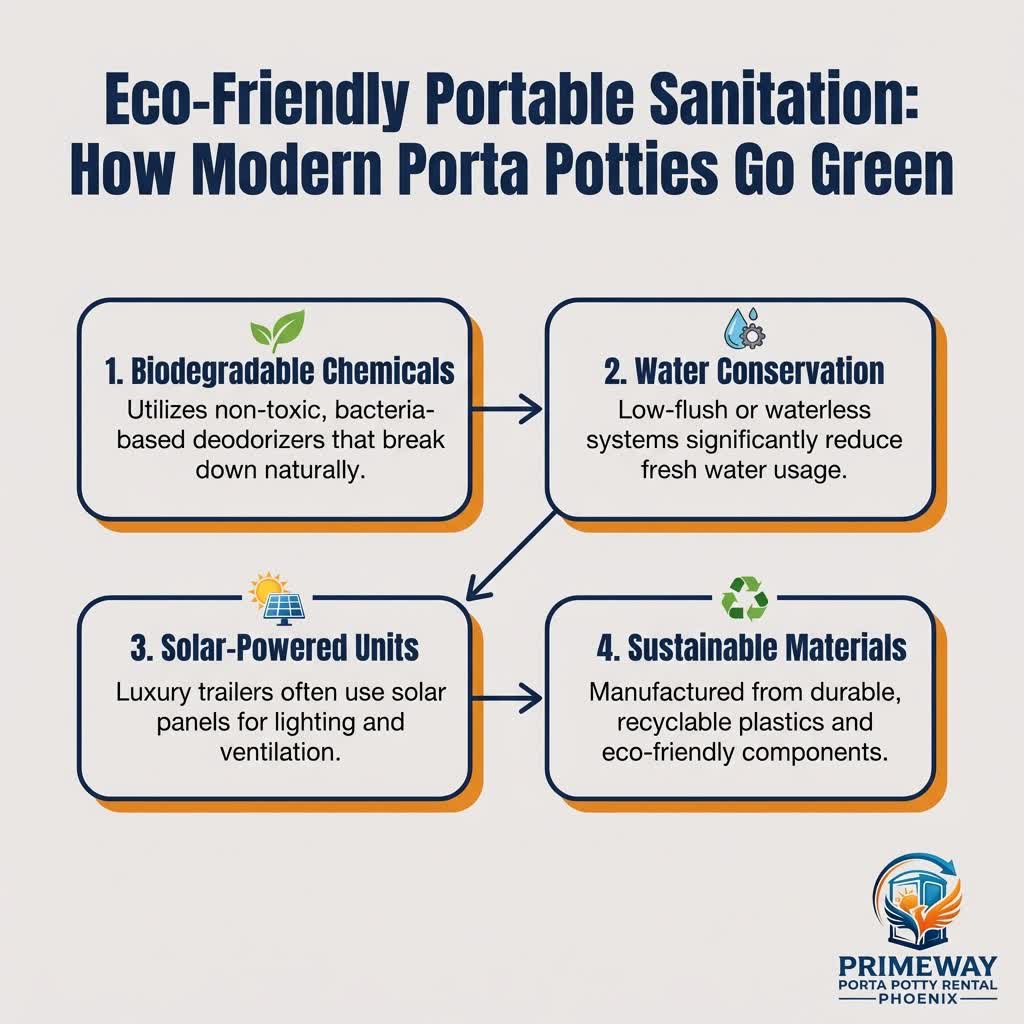
The newest generation of portable restrooms incorporates solar technology and energy-efficient features that reduce or eliminate the need for external power:
Solar-Powered Interior Lighting
Many modern units include small solar panels on the roof that power interior LED lights. This eliminates the need for battery changes, wired electrical connections, or generators — and it means the restroom is always well-lit, even at nighttime events.
Solar Ventilation Fans
Rooftop solar fans continuously circulate air inside the unit, reducing odor and improving comfort without any power consumption. In Phoenix's heat, proper ventilation makes a meaningful difference in the user experience.
Motion-Activated Systems
Some premium units use motion sensors to activate lighting and ventilation only when occupied, further reducing energy consumption.
Fleet Operations and Carbon Footprint
The environmental impact of portable sanitation isn't just about the units — it's also about the trucks that deliver and service them. Progressive rental companies are reducing their fleet carbon footprint through several strategies:
Route Optimization
GPS-based route planning minimizes driving distance and fuel consumption. Instead of servicing units in the order they were booked, modern dispatching systems create efficient routes that reduce total miles driven.
Fuel-Efficient and Alternative Fuel Vehicles
Newer vacuum trucks use cleaner diesel engines that meet EPA Tier 4 emissions standards. Some companies are beginning to transition to compressed natural gas (CNG) or biodiesel blends for their service fleets.
Consolidated Servicing
Rather than making separate trips for delivery, servicing, and pickup, efficient operators consolidate these activities. A single truck route can handle deliveries, mid-rental servicing, and pickups in one pass through an area.
Portable Sanitation vs. Permanent Facilities: The Environmental Comparison
When you compare the full lifecycle environmental impact of portable restrooms against building temporary or permanent restroom facilities, portable units come out ahead in several categories:
| Factor | Portable Restrooms | Permanent Construction |
|---|---|---|
| Water usage | Minimal to zero | 1.6–3.5 gallons per flush |
| Construction materials | None (units are reused) | Concrete, lumber, plumbing fixtures |
| Land disturbance | None | Excavation, foundation, sewer lines |
| Removal impact | Driven away, no trace | Demolition waste |
| Ongoing energy use | Solar or minimal | Electric lighting, water heating, HVAC |
| Lifespan flexibility | Days to years as needed | Permanent commitment |
For temporary needs — events, construction projects, seasonal venues — portable restrooms are objectively the more sustainable choice.
What to Ask Your Rental Provider About Sustainability
If environmental responsibility matters to your organization, here are the questions to ask when choosing a portable sanitation provider. Learn more about our commitment to quality service and how we approach sustainability at every step.
- "What chemicals do you use?" — Look for bio-based, formaldehyde-free products
- "Where does the waste go?" — The answer should be a licensed wastewater treatment facility
- "How old is your fleet?" — Newer units are more efficient and better-ventilated
- "Do you optimize service routes?" — Route optimization reduces unnecessary fuel consumption
- "Do your units have solar features?" — Solar lighting and ventilation are available on newer models
- "Are your units recyclable at end of life?" — HDPE units should be recycled, not landfilled
Green Events in Phoenix: A Growing Trend
Phoenix event planners are increasingly seeking sustainable options for every aspect of their events. From compostable catering supplies to carbon-offset programs, green event planning is becoming standard practice. Portable sanitation fits naturally into this approach.
Several Phoenix-area venues and event organizers now require vendors — including restroom providers — to meet minimum environmental standards. Having a provider that uses bio-based chemicals, solar-equipped units, and efficient logistics makes compliance straightforward.
For construction projects, LEED-certified buildings and green construction standards often include requirements for environmentally responsible temporary facilities, including restrooms. Choosing a provider that meets these standards simplifies your compliance documentation.
The Bottom Line
Portable restrooms have come a long way from the chemical-heavy, resource-intensive units of decades past. Today's modern porta potties conserve water, use biodegradable chemicals, are built from recyclable materials, and increasingly run on solar power. For temporary sanitation needs in a water-scarce region like Phoenix, they're not just convenient — they're the environmentally responsible choice.
The next time you're planning an event or managing a construction site, know that choosing portable sanitation isn't just practical — it's a decision that aligns with sustainability goals. And as the industry continues to innovate, the environmental benefits will only grow. For a broader look at how portable units have evolved, see our article on porta potty myths debunked.